What goes inside your jawbone matters more than most patients realize. Before a dentist ever picks up a drill, the implant material has already determined how your body will respond to the procedure, how the gum tissue will behave around the post, and whether the result will still look good a decade from now. Yet most people walk into their first implant consultation knowing almost nothing about the materials involved and that gap in knowledge can lead to decisions they later wish they had made differently.
This guide covers everything you need to know about dental implant materials what they are, how they compare, what the clinical evidence actually says, and how to figure out which one makes sense for your specific situation.
What you’ll learn in this article: The two dominant implant materials in use today and what distinguishes them, how clinicians decide which material fits which patient, what crown and abutment materials mean for the final appearance of your smile, and what questions to ask before committing to any implant procedure.
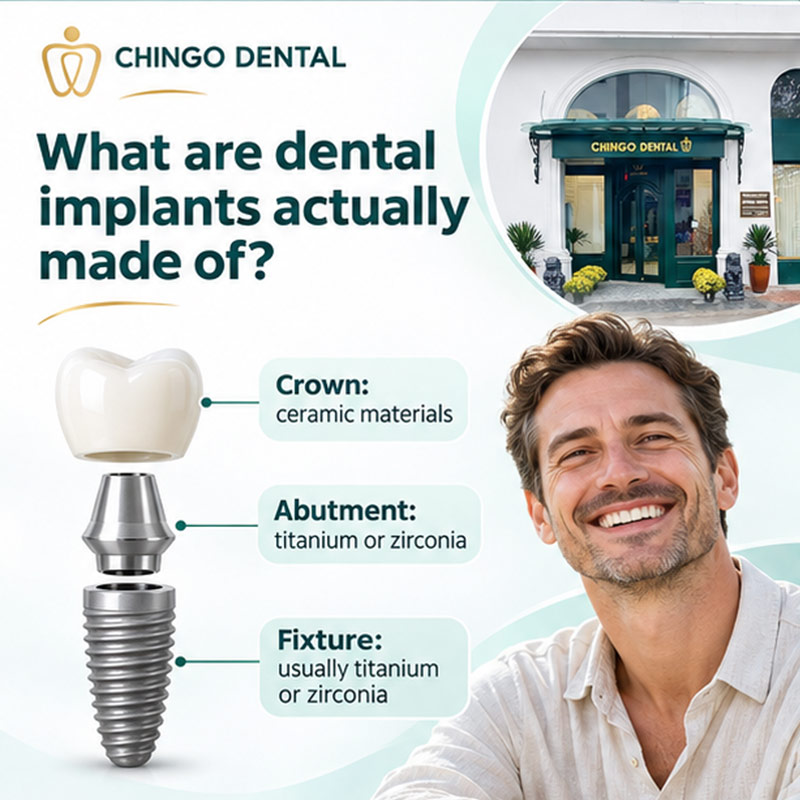
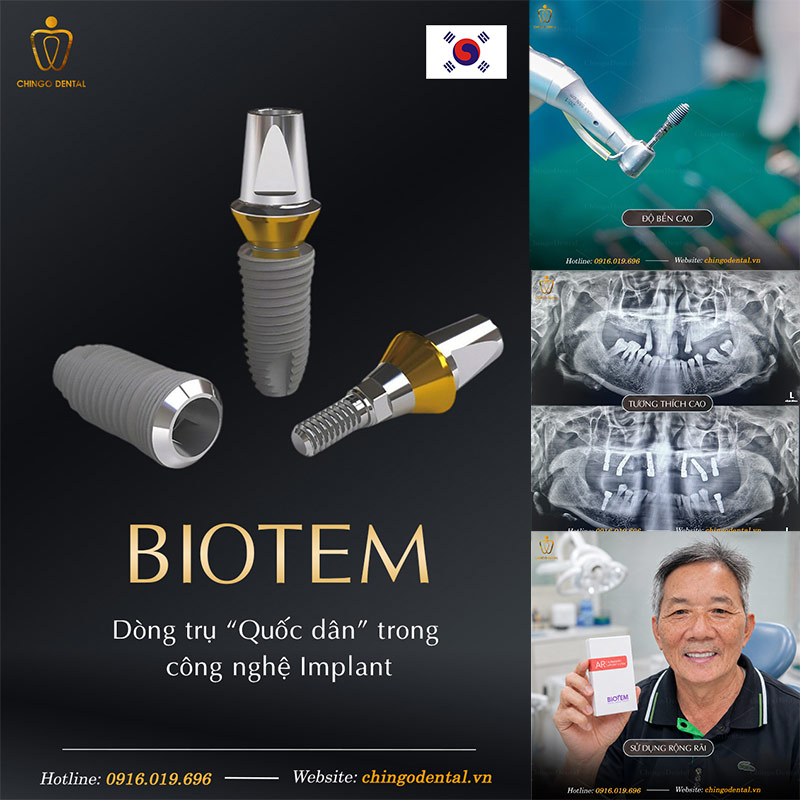
A dental implant is not a single piece, it has three distinct parts. The implant fixture is the post that goes into the jawbone and replaces the tooth root. The abutment connects that post to the visible part of the tooth. The crown sits on top of the abutment and is what other people see when you smile or talk. Each component can use a different material, and understanding that distinction clears up a lot of common confusion.
When patients ask about implant materials, they are almost always asking about the fixture the part that actually integrates with bone. That is where material choice has the greatest biological consequence. The abutment and crown materials matter too, but they influence aesthetics and durability more than they affect the healing process.
The implant fixture needs to do something that sounds almost impossible: sit inside living bone, trigger no immune rejection, and gradually fuse with the surrounding tissue until it functions as a stable artificial root. The biological process that makes this happen is called osseointegration, and the implant material determines whether that process succeeds or fails.
Today, two materials dominate clinical practice worldwide: titanium and zirconia. Everything else PEEK, cobalt chrome, early stainless steel fixtures from decades past represents either a niche application or a historical footnote. For the overwhelming majority of patients considering cosmetic dentistry or tooth replacement, the conversation comes down to these two.
Why titanium became the gold standard for implant fixtures
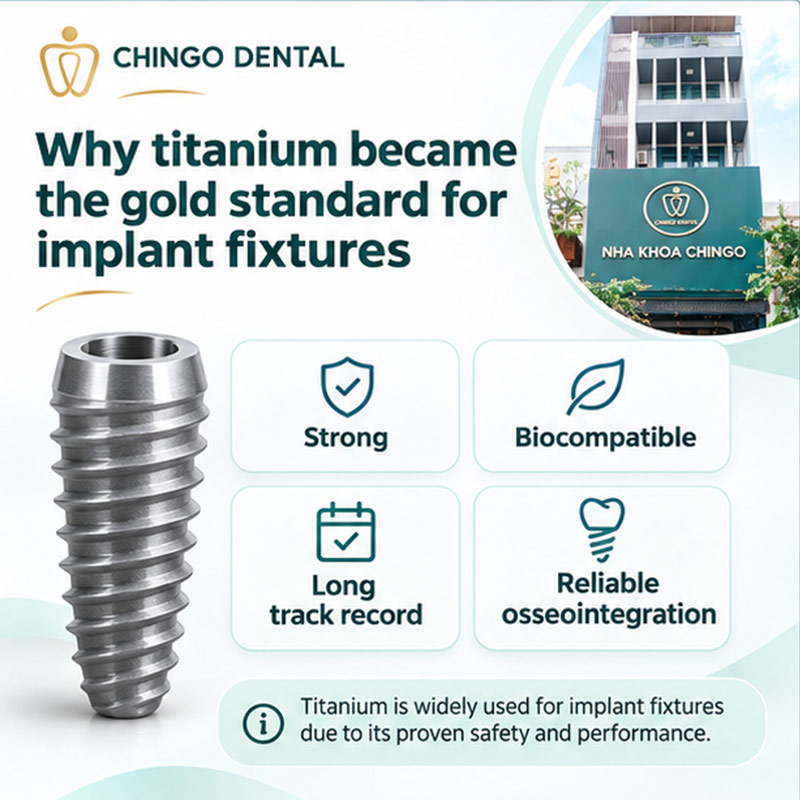
Titanium did not become the dominant dental implant material by accident. The story begins with Swedish surgeon Per-Ingvar Brånemark, who discovered in the 1950s that titanium could bond directly to bone without being rejected a property no one had anticipated at the time. That discovery led to the first titanium dental implant placed in a human patient in 1965, and the science has been building on that foundation ever since.
What makes titanium work so well inside the body is a thin layer of titanium oxide that forms naturally on its surface. That oxide layer is chemically stable, non-toxic, and creates the ideal surface for bone cells to attach to and grow around. The process is gradual, it typically takes three to six months for full osseointegration but the resulting bond is remarkably strong and durable.
Multiple meta-analyses and systematic reviews published in peer-reviewed international dental journals such as Clinical Oral Implants Research and the International Journal of Oral & Maxillofacial Implants report that titanium dental implants achieve clinical survival rates exceeding 95% to 97% at 10-year follow-up, demonstrating consistent long-term performance across large patient cohorts
Titanium is also versatile. It performs well in both the front and back of the mouth, works across a wide range of bone densities, and is compatible with procedures like bone grafting when the available jaw structure is not ideal. The cost tends to be lower than ceramic alternatives, which matters for patients balancing quality with budget.
The drawbacks are real but manageable for most people. The grey metal color can become visible at the gumline if the surrounding tissue ever recedes an issue that affects anterior restorations more than posterior ones. Some patients raise concerns about titanium sensitivity, though the clinical literature is clear that true titanium allergy is extremely rare. The material is also non-ferromagnetic, which means MRI scans remain possible, though minor imaging artifacts can occur near the implant site.
What zirconia implants offer that titanium cannot
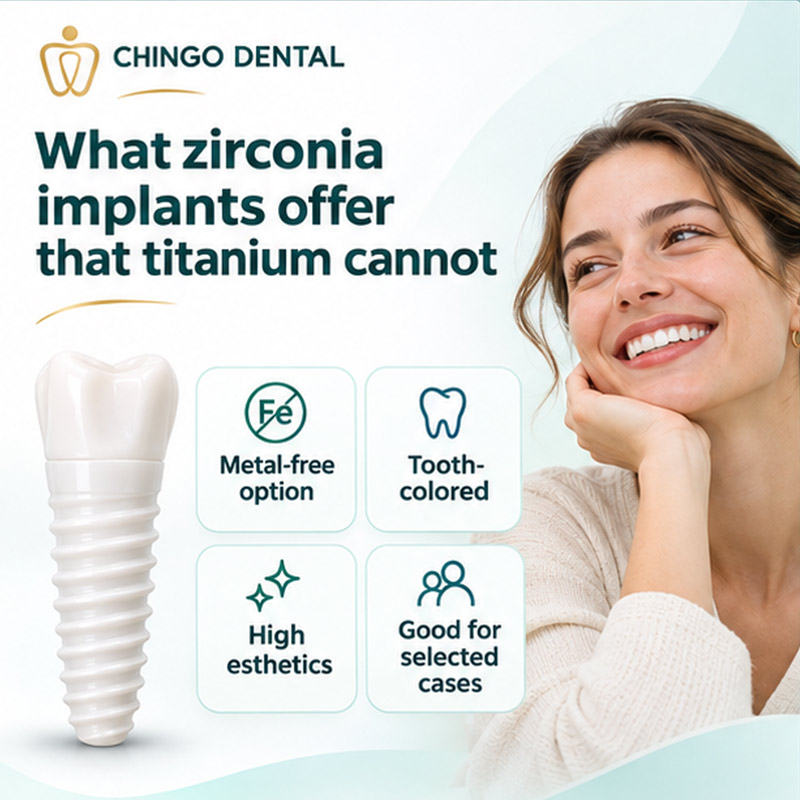
Zirconia or zirconium dioxide entered the dental implant market as a ceramic alternative to metal. It is not a metal at all. It is a high-strength oxide ceramic, and it looks white from the moment it comes out of the packaging. That single characteristic changes the aesthetic calculus for a significant subset of patients.
For anyone with thin gum tissue, a high smile line, or front teeth that sit prominently in view when speaking, the grey metal of a titanium post becoming visible at the gumline is a genuine concern. Zirconia eliminates that risk entirely. The white color of the fixture means that even if gum tissue shifts over time, there is no dark shadow to give the restoration away.
Beyond aesthetics, zirconia is fully metal-free. For patients who prefer to avoid metal in their body for personal, philosophical, or health-related reasons, this is a meaningful distinction. It also has a naturally smooth surface that tends to accumulate less bacterial plaque than titanium, which may contribute to healthier tissue around the implant over the long term.
Clinical evidence for zirconia implants has matured considerably over the past decade. Randomized controlled clinical trials and systematic reviews in peer-reviewed journals including Clinical Oral Implants Research and the Journal of Prosthetic Dentistry demonstrate that under standard prosthetic conditions, zirconia implants achieve survival rates ranging from 94% to over 98% at 1 to 5 years post-loading, with crestal bone loss and soft-tissue response comparable to titanium and no statistically significant difference between the two materials.
However, clinical literature also highlights clear anatomical and surgical boundaries. Long-term follow-up studies published in Clinical Oral Investigations indicate that the 5-year survival rate of zirconia implants can drop to approximately 84% – 88% when protocols include immediate placement into fresh extraction sockets or early occlusal loading; conversely, delayed placement protocols allowing bone healing prior to implant insertion significantly improve long-term clinical outcomes.
Zirconia does carry a higher upfront cost than titanium, and the design of most zirconia fixtures limits some of the placement flexibility that titanium offers. For posterior teeth that absorb heavy biting forces, some clinicians still prefer titanium for its mechanical robustness. However, for aesthetic zones and patients with particular preferences, zirconia has earned its place as a clinically credible option
Titanium vs. zirconia: how do they actually compare?
The honest answer is that neither material is universally superior. Each performs well for specific patients in specific clinical situations, and choosing between them is a clinical decision rather than a marketing one.
Titanium brings decades of long-term evidence, broad compatibility with different bone types and jaw locations, lower cost, and flexibility in design. It is the safer choice for cases involving bone grafting, posterior teeth subject to heavy load, or patients where complexity calls for the most predictable outcome.
Zirconia brings excellent aesthetics, a metal-free profile, favorable soft tissue response, and an increasingly strong clinical track record. It is the more compelling option for visible front teeth, patients with thin or delicate gum tissue, and those who place a priority on avoiding metal in their body.
What both materials share is more important than what separates them. Both are biocompatible implant materials that meet international standards for safety. Both are capable of full osseointegration when properly placed. Both, in the right hands with the right patient, can deliver a restoration that lasts for decades.
The comparison table below captures the key practical differences:
Factor
Titanium
Zirconia
Biocompatibility
Excellent
Excellent
Long-term evidence
Extensive (10+ years)
Growing, strong 1 – 5 year data
Aesthetics
Grey tone can show at gumline
White, fully tooth-colored
Metal-free
No
Yes
Plaque resistance
Standard
Slightly better
Posterior use
Preferred for heavy load
Use with care
Cost
Lower
Higher
Best suited for
Most cases, bone grafting
Aesthetic zones, metal sensitivity
The right choice depends entirely on who you are, where the implant is going, and what your clinical assessment reveals. That is exactly why a thorough consultation with 3D imaging and a detailed treatment plan matters as much as the material itself.
What about abutment and crown materials?
Once the fixture integrates with the bone, the abutment and crown complete the restoration. These components affect how the final tooth looks, how durable it is under daily chewing forces, and whether the transition from implant to visible tooth looks natural or artificial.
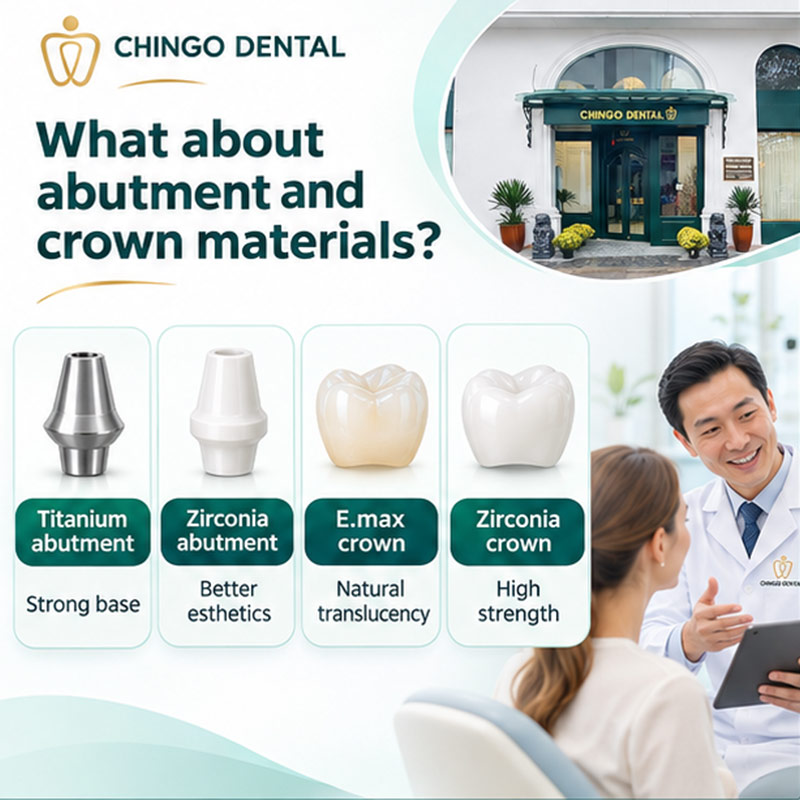
Abutments come in two main types. Titanium abutments are strong, universally compatible, and work well for posterior restorations where aesthetics are less critical. Zirconia abutments are tooth-colored and pair naturally with ceramic crowns in visible areas they eliminate the dark abutment shadow that can sometimes be seen through translucent ceramic crowns.
For the crown itself, two materials lead modern cosmetic dentistry practice. Zirconia crowns are strong, durable, and available in highly translucent varieties that mimic the light properties of natural enamel. Emax a lithium disilicate ceramic is particularly valued for front teeth because of its exceptional translucency and natural appearance under different lighting conditions.
At Chingo Dental, implant-supported crowns are fabricated using CAD/CAM technology with both zirconia and Emax ceramic materials the same internationally recognized standards used in the clinic’s full porcelain crown service. That consistency means the implant crown can be matched precisely to the color, translucency, and shape of surrounding natural teeth, rather than standing out as an obviously artificial replacement.
What makes an implant material safe and what actually causes problems?
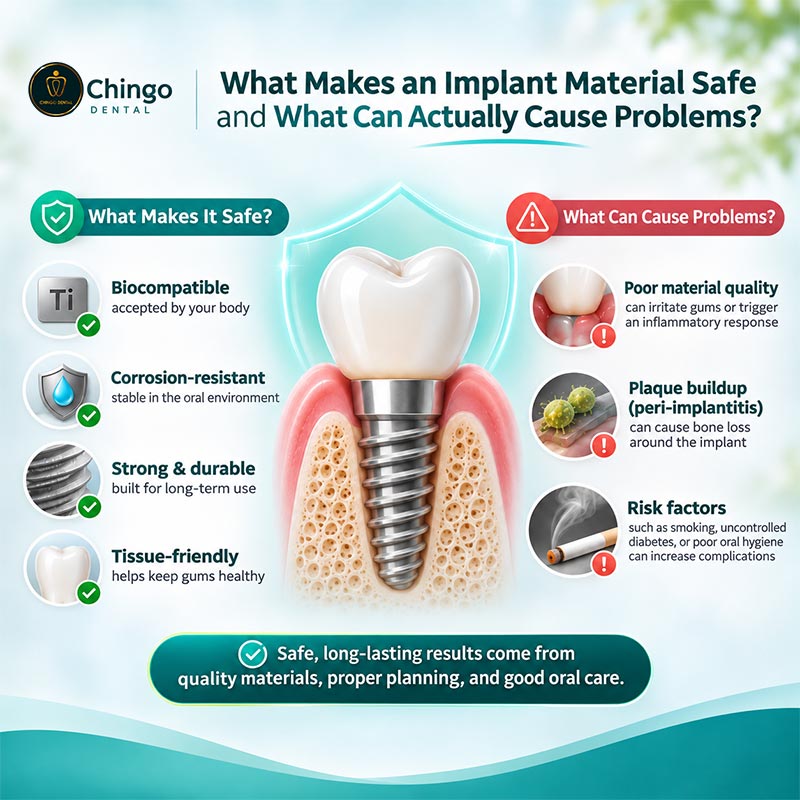
Safety in dental implant materials is defined by biocompatibility the material must not provoke an immune response, release harmful substances into the surrounding tissue, or degrade in ways that cause damage over time. Both titanium and zirconia meet international biocompatibility standards, including ISO 10993, the benchmark applied globally to materials used inside the human body.
The question of metal sensitivity comes up frequently, particularly among patients who have experienced reactions to jewelry or other metals. True titanium sensitivity is documented in the clinical literature but is exceptionally uncommon. The more important distinction is between sensitivity and allergy many patients who describe themselves as metal-sensitive are reacting to nickel or other alloys, not titanium. Zirconia remains the preferred option for anyone with a confirmed or strongly suspected metal hypersensitivity, since it contains no metallic components whatsoever.
What genuinely affects implant outcomes is often less about the base material and more about the quality of the implant system and the precision of placement. An implant made from a certified material but placed with insufficient bone support, poor angulation, or without adequate imaging is at far greater risk of failure than a well-planned procedure using either of the two main materials. That is why the implant surface treatment the micro-texture and chemical modifications applied to the fixture before placement matters alongside the material itself. Surface-treated implants integrate more reliably because they present a more favorable environment for bone cell attachment during the early healing phase.
For patients considering dentistry in Hanoi or dentistry in Da Nang, it is worth asking specifically which implant brands and systems a clinic uses, and whether those systems carry internationally recognized regulatory clearance. Chingo Dental uses certified implant systems placed under CT Cone Beam 3D guidance a technology that maps bone density, identifies nerve anatomy, and allows the clinical team to plan implant position in three dimensions before surgery begins. That level of precision reduces placement error, which is one of the most controllable variables in long-term implant success.
How does a dentist decide which implant material is right for you?
The selection process is more nuanced than most patients expect, and it draws on information that simply cannot be gathered from a standard X-ray.
Bone density and volume come first. The jaw needs to have adequate bone to support the fixture regardless of material choice, but density also influences which material and implant diameter will integrate most reliably. A 3D Cone Beam CT scan gives the clinical team actual volumetric data to work with not an approximation.
The position of the implant matters significantly. A posterior molar that absorbs the heaviest biting forces calls for different considerations than a front tooth that is visible in every photograph. For anterior restorations in patients seeking cosmetic dentistry results, gum thickness, the height of the smile line, and the color of the surrounding teeth all influence which material and crown type will produce a seamless outcome.
Medical history enters the equation too. Patients with certain systemic conditions, documented sensitivities, or who are taking medications that affect bone metabolism may need a modified approach. For international patients or expats seeking dentistry in Da Nang or dentistry in Hanoi, a first appointment that includes a thorough medical history review is not an administrative formality it is a clinical necessity.
Aesthetic goals deserve an honest conversation. Patients who want a result that is completely indistinguishable from natural teeth, particularly in a high-visibility position, need to understand what each material can and cannot deliver at the gumline. That conversation should happen before treatment begins, not after.
Budget is a practical consideration and should be discussed transparently. The cost difference between titanium and zirconia fixtures is real, but it needs to be weighed against the specific clinical and aesthetic priorities of each case not treated as the primary decision variable.
At Chingo Dental, every implant consultation includes both the 3D imaging assessment and a Digital Smile Design review, giving the clinical team a complete picture of bone anatomy, soft tissue characteristics, and the aesthetic outcome the patient is aiming for. For international patients the clinic’s bilingual English-speaking team is in both Hanoi and Da Nang this consultation process covers all of the above in a single appointment, with a clear written treatment plan and transparent pricing before any commitment is made.
Frequently asked questions about dental implant materials (FQA)
Question 1. What is the most commonly used dental implant material today?
Titanium remains the most widely used dental implant material worldwide. It has the longest clinical track record, the broadest evidence base, and consistent performance across diverse patient populations and jaw conditions. Zirconia is growing in adoption and is now a clinically credible alternative, particularly for aesthetic applications.
Question 2. Are zirconia implants as strong as titanium ones?
Controlled clinical trials published in Clinical Oral Implants Research show no statistically significant difference in crestal bone stability or short- to medium-term implant survival rates between zirconia and titanium when placed within appropriate clinical indications.
Question 3. Can you be allergic to dental implant materials?
A genuine allergy to titanium is extremely rare in the clinical literature. Many patients who worry about this are reacting to other metals most commonly nickel not titanium itself. Zirconia is metal-free and is considered the appropriate choice for patients with confirmed or strongly suspected metal hypersensitivity reactions.
Question 4. How long do dental implants made from these materials actually last?
Long-term clinical data spanning 5 to 10 years for modern zirconia implants continues to expand, with multi-year evidence showing favorable survival outcomes comparable to titanium for single-tooth restorations in the aesthetic zone
Question 5. Does it matter which crown material is placed on top of a titanium or zirconia implant?
It matters considerably for the final appearance. Zirconia and Emax crowns represent the current best combination of durability and aesthetics for implant-supported restorations. PFM porcelain fused to metal crowns are increasingly rare in modern practice because their opaque metal base limits the translucency that makes crowns look natural. The crown material is also what determines whether the visible result matches the surrounding natural teeth convincingly.
Question 6. Can dental implants affect MRI scans?
Titanium is non-ferromagnetic and is generally considered MRI-compatible. Minor imaging artifacts may appear near the implant site, which is worth disclosing to any radiologist or imaging specialist before a scan. Zirconia creates no such interference. Both materials are considered safe for routine MRI procedures.
Choosing the right implant material starts with the right consultation
The material inside your implant is not a commodity decision. It is a clinical choice that should be made based on your bone anatomy, the position of the missing tooth, your aesthetic goals, and your personal health profile. Neither titanium nor zirconia is the right answer in every case but one of them is likely the right answer for your specific case, and figuring out which one is exactly what a proper implant consultation is designed to determine.
At Chingo Dental with clinics in Hanoi and Da Nang every implant patient receives a CT Cone Beam 3D assessment, a Digital Smile Design review, and a fully transparent materials briefing before treatment begins. The English-speaking clinical team works with both titanium and zirconia implant systems, certified to international standards, and takes the time to explain which material they are recommending and precisely why that recommendation fits the individual patient’s situation.
If you are exploring cosmetic dentistry options in Vietnam, or simply want a second opinion on an implant plan you have already received, the most important step is a thorough consultation with imaging not a decision made based on price alone or a friend’s recommendation.
Clinical References & Standards:
American Dental Association (ADA): Clinical guidelines on biocompatible dental implant materials and restorative standards.
International Organization for Standardization (ISO 10993): Biological evaluation of medical devices for implantable dental systems.
Clinical Oral Implants Research & Journal of Prosthetic Dentistry: Systematic reviews on osseointegration and long-term survival rates of Titanium vs. Zirconia dental implants.
Book your implant consultation at Chingo Dental and get a clinical recommendation grounded in your actual anatomy, not a one-size-fits-all approach.
Contact Information – Chingo Dental International Cosmetic Dentistry
Chingo Hanoi Branch:
Address: No. 1, Lane 558 Nguyen Van Cu Street, Bo De Ward, Hanoi City
Opening hours: 8:00 AM – 18:00 PM, all days of the week
Email: info@chingodental.vn
Website: https://chingodental.vn
This article is intended for informational purposes. Individual treatment plans and costs vary based on clinical assessment. Consult a qualified dental professional before making any treatment decisions.