Your gums are bleeding when you brush. They look a little swollen, maybe redder than usual. You rinse and move on but that small sign is worth paying attention to. Bleeding gums are almost always the first signal of gingivitis, the most common and earliest form of gum disease. And the good news? Caught at this stage, it is completely reversible.
According to a 2026 report by ZipDo citing global health data, gum disease currently affects approximately 38.4% of adults aged 30 to 69 worldwide, roughly 1.21 billion people. Yet many of them never seek treatment until the problem has progressed far beyond what a routine cleaning can fix. That gap between early signs and action is exactly what this guide is here to close.
This article covers everything you need to know about gingivitis what it actually is, how to recognize it, what causes it, and how to treat and prevent it effectively. Whether you have noticed swollen gums, red gums, or gums that bleed for no obvious reason, you will find clear and practical answers here.
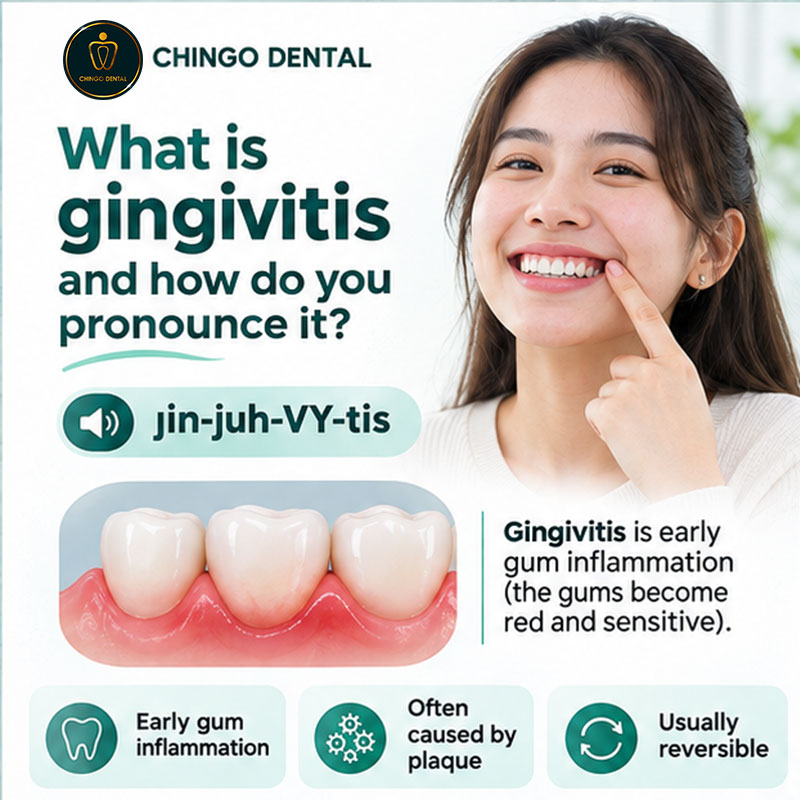
Gingivitis is the medical term for inflammation of the gingiva, which is the soft gum tissue that surrounds and supports the base of your teeth. The word comes from the Latin gingiva (gum) and the suffix -itis (inflammation). To pronounce it correctly jin-jih-VY-tis.
At its core, gingivitis happens when bacterial plaque that sticky, colorless film that forms on your teeth throughout the day is not removed consistently through brushing and flossing. The bacteria in plaque release toxins that irritate the gum tissue, triggering an immune response. The result is redness, swelling, and bleeding that most people notice when they brush.
What makes gingivitis different from more serious gum disease is a critical word reversible. The inflammation at this stage is confined to the soft tissue only. No bone has been lost, no structural damage has occurred. With the right care both professional and at home the gum tissue can fully return to health.
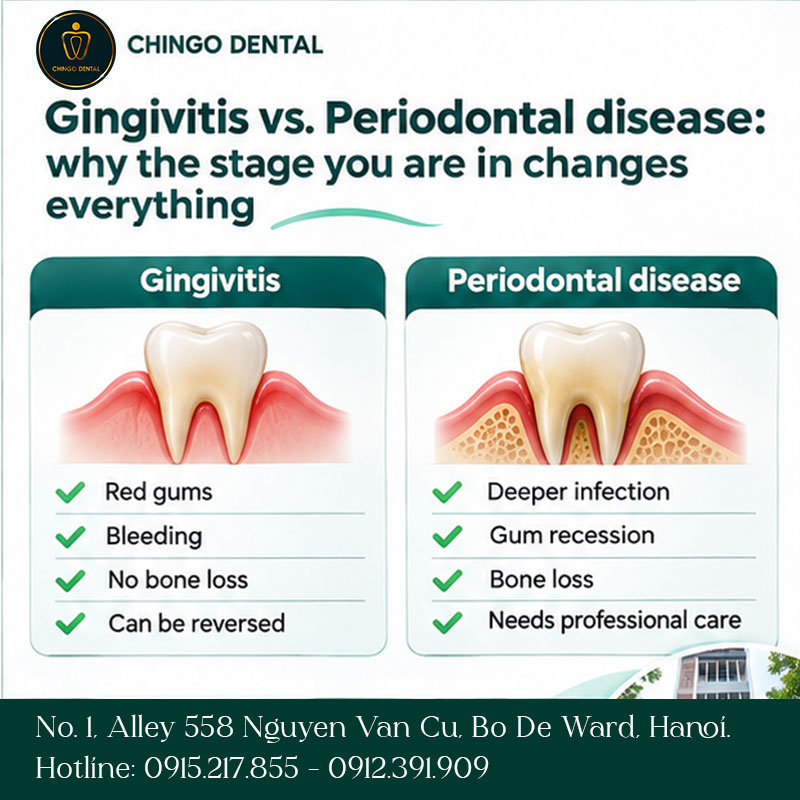
This is the key distinction between gingivitis and periodontal disease. Gingivitis is Stage 1, the warning light on the dashboard. Periodontal disease (also called periodontitis) is what develops when that warning goes unaddressed. At that point, the infection spreads deeper, attacking the bone and connective tissue that hold the teeth in place damage that cannot be undone. Understanding this distinction is not just clinical knowledge. It is the reason early action matters so much.
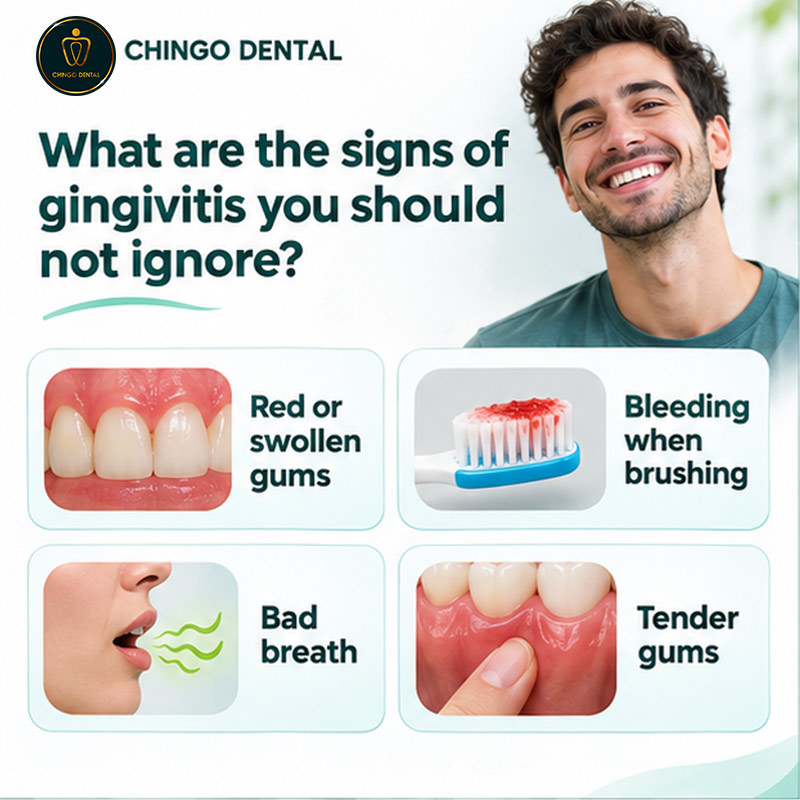
What are the signs of gingivitis you should not ignore?
One of the tricky things about gingivitis is that it rarely hurts in the early stages. Many people dismiss swollen gums or the occasional blood on their toothbrush as normal. It is not. These are your body’s first attempts to flag an infection.
Early warning signs
Healthy gums are firm, pale pink, and fit snugly around each tooth. When gingivitis sets in, that changes. The most common early signs are red gums along the gumline, puffiness or swelling that makes the gums look rounder than usual, and gingival bleeding when brushing or flossing. Some people also notice persistent bad breath that returns quickly even after brushing, a sign that bacterial activity in the mouth is elevated.
If your gums bleed every time you floss and you think flossing is the problem, consider this healthy gums do not bleed from gentle flossing. Bleeding is a signal from the inflamed tissue, not a reason to stop flossing.
Progressive symptoms
If early-stage gingivitis is not addressed, the inflammation deepens. You may notice gums bleeding for no reason not just during brushing, but spontaneously. Sore gums, especially when eating crunchy or hard foods, become more noticeable. The gumline may start to recede slightly, making teeth appear longer than they used to. Painful swollen gums, particularly in one area, can indicate a more acute infection that needs prompt attention.
When it becomes serious
Left untreated, gingivitis progresses toward the edge of genuine periodontal disease. At this point, the gum tissue loses its ability to hold its shape. Rotten gums a term that describes tissue that has become necrotic or severely damaged, may develop in extreme, neglected cases. Blood from teeth when eating or even at rest, combined with teeth that feel slightly loose, signals that bone loss has likely already begun. This is no longer gingivitis territory; this is periodontitis, and it requires specialist intervention.
The point is not to alarm, but to be clear: none of these symptoms should be waited out.
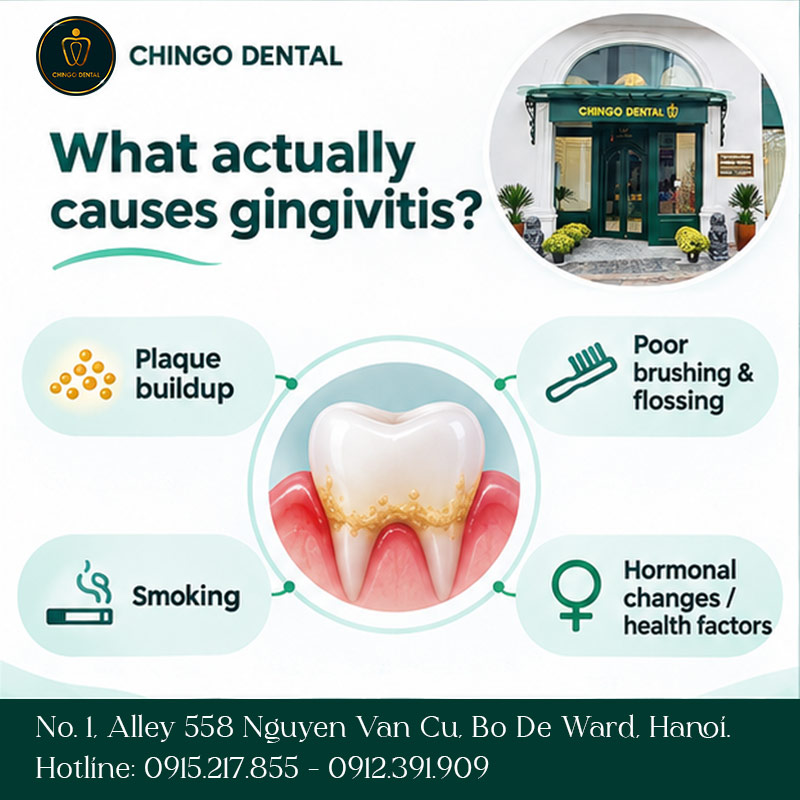
What actually causes gingivitis?
Every case of gingivitis starts in the same place: plaque. This sticky, transparent film forms on your teeth within hours of eating. It is made up of bacteria, their waste products, and food particles. Brush it away consistently, and it stays manageable. Leave it long enough, and it hardens into tartar, a calcified deposit that no amount of brushing can remove. Only a professional cleaning can.
Tartar buildup along and below the gumline is the direct trigger for gum inflammation. The bacteria living in that buildup release toxins that irritate the gum tissue continuously. The body responds by sending blood flow and immune cells to the area which is exactly what causes the redness and swelling you see.
Who is most at risk?
Plaque affects everyone, but certain factors make gingivitis significantly more likely to develop or worsen. Smoking is among the most significant, it reduces blood flow to the gums, masks bleeding, and impairs healing. People with diabetes are more vulnerable because elevated blood sugar creates a favorable environment for bacterial growth. Hormonal changes during pregnancy, puberty, or menopause can make gum tissue more reactive to plaque, which is why pregnancy gingivitis is a recognized clinical condition.
Certain medications particularly those for high blood pressure, epilepsy, and immunosuppression an cause gum overgrowth as a side effect, making proper cleaning harder. Dry mouth, whether from medication or other causes, removes the natural protective function of saliva. Nutritional deficiencies, particularly in Vitamin C, weaken the gum tissue’s ability to maintain itself.
For expats and long-term foreign residents in Vietnam, irregular access to dental care is a real factor. Many people arrive without an established dental routine and go months or even years between professional cleanings. By the time they book an appointment, what might have been easy-to-manage gingivitis has had time to progress. It is a pattern that clinics specializing in dentistry in Hanoi and Da Nang see regularly.
Gingivitis vs. Periodontal disease: why the stage you are in changes everything
Not all gum disease is the same, and understanding the difference between gingivitis and periodontitis is one of the most important things this article can offer you.
Gingivitis is inflammation of the gum tissue only. The underlying bone and the connective fibers that anchor your teeth are untouched. Treat it, and there is no lasting damage. Periodontitis, by contrast, involves the destruction of that bone and those fibers. Once bone is lost, it does not grow back on its own. Treatment can stop the progression, but it cannot undo what is already gone.
Here is how the stages look side by side:
Stage
Name
Reversible
Key Signs
0
Healthy gums
______
Pink, firm, no bleeding on brushing
1
Gingivitis
Yes, fully
Red gums, swollen gums, gingival bleeding, bad breath
2
Early Periodontitis
Partially
Pockets 4 – 5mm deep, mild bone loss visible on X-ray
3
Moderate Periodontitis
No
Deeper pockets, noticeable bone loss, possible tooth mobility
4
Advanced Periodontitis
No
Severe bone loss, tooth loss risk, systemic health implications
The World Health Organization has identified the link between oral infection and systemic disease as a primary focus of its 2026 global health initiative, citing periodontal conditions among the oral diseases driving broader health outcomes. This matters because periodontitis has been associated with increased risk for cardiovascular conditions, pregnancy complications, and difficulty managing blood sugar in people with diabetes.
All of that starts with plaque and all of it can be intercepted at the gingivitis stage. That is the window to act in.
How to treat gingivitis: what actually works
The honest answer to how to cure gingivitis is this you cannot do it on your own. Home care is essential, but it is not enough on its own if tartar has already formed. Tartar is hardened mineral deposit that adheres to the tooth surface and cannot be removed by brushing or flossing and only by professional instruments. Once that is cleared, consistent home care keeps gingivitis from coming back.
What professional treatment looks like
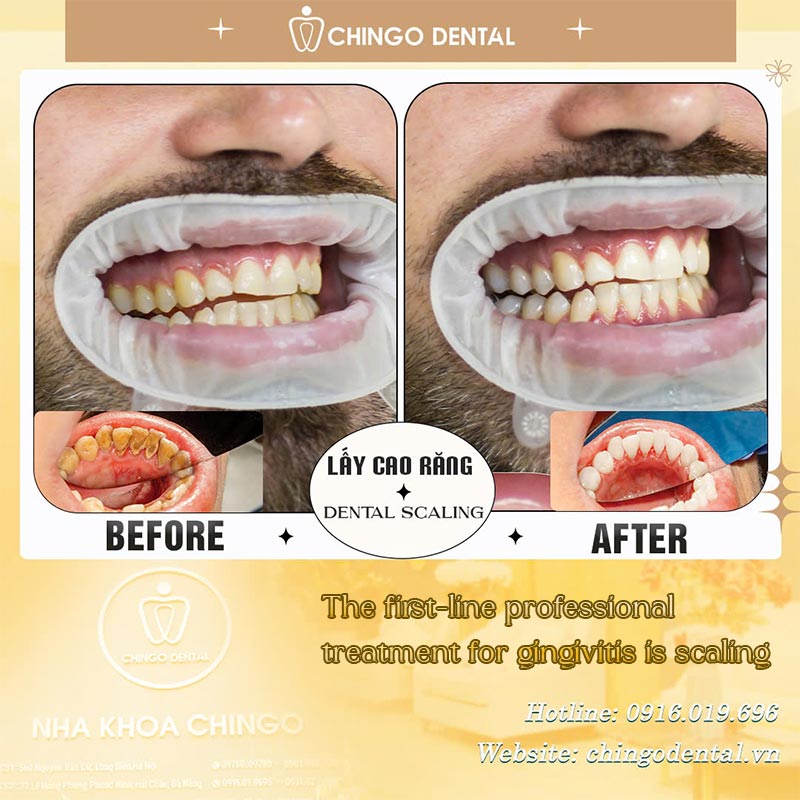
The first-line professional treatment for gingivitis is scaling a thorough cleaning that removes plaque and tartar from above and below the gumline. In more advanced cases, a deeper procedure called scaling and root planing cleans the root surfaces of the teeth to allow the gum tissue to reattach properly.
At Chingo Dental’s clinics in Hanoi and Da Nang, this process is performed using Piezotome ultrasonic scaling technology, a system that removes tartar with high-frequency vibration rather than manual scraping. It is gentler on the surrounding tissue, more precise along the gumline, and significantly more comfortable than older methods. The clinical team also uses digital diagnostic imaging to assess the depth of any gum pockets before treatment, ensuring nothing is missed beneath the surface.
For international patients or expatriates navigating dentistry in Vietnam for the first time, one of the most common concerns is communication. Chingo Dental operates with bilingual, English-speaking staff across both locations, so the consultation, the diagnosis, and the treatment plan are all explained clearly in the patient’s own language, without shortcuts. Pricing is published transparently, with no surprise costs added after the visit.
Depending on the severity of the case, the dentist may also prescribe an antimicrobial or antibacterial rinse to use at home for a short period following the cleaning. This helps reduce the bacterial load while the gum tissue begins to heal.
What you can do at home
Home care is the other half of the equation. After a professional cleaning, the goal is to keep plaque from building up again. That means brushing for two full minutes, twice a day, using a soft-bristle brush and proper technique angling the brush at 45 degrees toward the gumline rather than brushing straight across. Flossing daily is non-negotiable. It is the only way to remove plaque from the tight spaces between teeth and along the gumline where brushes cannot reach.
An antiseptic mouthwash adds another layer of protection, but it supplements flossing it does not replace it. Salt water rinses can help reduce inflammation in the short term and are a simple, low-cost support during recovery. Used consistently, these habits are what prevent gingivitis from recurring after professional treatment.
How long does it take to see results?
This is one of the most common questions, and the answer is encouraging. Research cited by dental practitioners indicates that most people see noticeable improvement within one to two weeks of starting consistent flossing and after a professional cleaning. Full reversal of gum tissue appearance the redness fading, the swelling settling, the bleeding stopping typically takes two to four weeks when both professional treatment and home care are maintained. Moderate cases may take longer, particularly when contributing factors like smoking or diabetes are present.
Gingivitis does not heal in one visit and then stay healed permanently. It is a condition that returns if the underlying cause plaque accumulation is allowed to return. The cleaning removes the tartar; the daily routine is what keeps it from coming back. How to treat a gum infection at this stage is ultimately a question of two things working together: the clinical removal of what cannot be brushed away, and the daily discipline that makes the clinical treatment last.
How to prevent gingivitis from returning
Prevention is not complicated, but it does require consistency. Most cases of gingivitis are entirely preventable with the right habits in place. The challenge is that the habits need to become automatic for the scare, then let slide.
The foundation is a daily oral hygiene routine that actually covers all surfaces. Brushing twice a day removes plaque from the outer, inner, and chewing surfaces of the teeth. Flossing once a day gets the spaces between teeth and the gumline the exact zones where gingivitis tends to begin. These two steps together address the primary cause of gingivitis before it has a chance to set in.
Beyond the daily routine, professional cleanings are what remove any tartar that has formed in areas the brush and floss cannot fully reach. For most healthy adults, twice a year is adequate. For people with a history of gingivitis, smokers, or those with systemic conditions like diabetes, every three to four months may be more appropriate. Research from the Journal of Periodontology has shown that professional dental cleanings reduce gum disease incidence by approximately 35%.
Diet plays a quieter but real role. Sugar feeds the bacteria in plaque, so a high-sugar diet consistently gives the bacteria more fuel to work with. Crunchy vegetables and fruits with high water content think carrots, celery, apples, can help clean tooth surfaces naturally between brushings. Foods rich in Vitamin C support gum tissue health from within. Staying well-hydrated also supports healthy saliva production, which is a natural defense mechanism.
For those receiving cosmetic dentistry treatments veneers, crowns, teeth whitening, or orthodontics gum health is a prerequisite, not an afterthought. Cosmetic dentistry delivers lasting results only on a foundation of healthy gum tissue. Any cosmetic work done on inflamed gums is at risk of complications, changed aesthetics over time, or the need for revision. This is something the clinical team at Chingo Dental addresses upfront during consultations: gum health first, cosmetic goals second.
If you smoke, reducing or quitting is the single highest-impact change you can make for your gum health. Smoking suppresses the immune response in the gum tissue and masks the bleeding that would otherwise alert you to a problem. It is one of the strongest risk factors for both developing and failing to recover from gingivitis and periodontal disease.
When should you see a dentist about your gums?
There is no need to wait until something is visibly wrong to book a dental appointment but if you are already noticing symptoms, here is a clear set of signals that mean it is time to go.
If your gums bleed every time you brush or floss for more than a week, even after improving your technique, that bleeding is not going to resolve on its own without a professional cleaning. Swollen gums that do not improve, persistent bad breath despite good hygiene, gums that look like they are pulling away from the teeth, or any tooth that feels even slightly mobile all of these warrant a visit.
Some situations call for more urgent attention. If you have facial swelling, difficulty swallowing, fever alongside gum pain, or swollen lymph nodes in the neck combined with mouth pain, these may indicate an infection that has spread. This is not standard gingivitis; it needs prompt medical and dental assessment.
Children and teenagers are not exempt. A 2025 narrative review published in Frontiers in Oral Health found that gingivitis prevalence among children and adolescents ranges from approximately 20% to over 90% depending on the population, with higher rates in lower-income settings. For parents concerned about their children’s gum health, a regular checkup is the simplest preventive step.
For patients in Vietnam both residents and long-term visitors Chingo Dental offers comprehensive periodontal assessments at its clinics in Hanoi and Da Nang. The team uses digital imaging to evaluate gum pocket depth and bone levels accurately, so there is no guesswork in the diagnosis. If you have been putting off a dental visit, the gum health check is the right place to start. Gum disease caught at the gingivitis stage requires far less time, far less cost, and far less discomfort to resolve than periodontitis ever will.
Frequently asked questions about gingivitis (FQA)
Question 1. Can gingivitis go away on its own without treatment?
Gingivitis caused by plaque alone will not fully resolve without a professional cleaning if tartar has already formed. Improving your brushing and flossing routine will reduce the inflammation, but hardened tartar on the tooth surface and below the gumline must be removed by a dental professional. The inflammation may appear to calm down temporarily, but the underlying cause remains.
Question 2. Is gingivitis contagious?
The bacteria responsible for gingivitis can transfer between people through shared utensils, kissing, or close contact. However, whether the bacteria establish themselves and cause gingivitis depends largely on the individual’s oral hygiene habits, immune response, and lifestyle factors. It is accurate to say that the risk exists, but casual exposure is not the primary way people develop gum disease.
Question 3. How long does it take to cure gingivitis?
For mild gingivitis, two to four weeks of consistent professional treatment and improved home care typically results in full reversal. Moderate to more advanced cases may take several weeks to a few months. The timeline depends on how much tartar has built up, how well the daily routine is maintained after the cleaning, and whether any systemic factors such as smoking or unmanaged diabetes are present.
Question 4. Can children get gingivitis?
Gingivitis is common in children and adolescents. It often appears around the time of puberty, when hormonal changes make gum tissue more sensitive to plaque. Regular checkups, proper brushing technique, and flossing habits established early are the most effective prevention. If a parent notices red or swollen gums or bleeding when their child brushes, a dental evaluation is worthwhile.
Question 5. What does gingivitis look like?
The visual signs include red gums (instead of the healthy pale pink), swollen or puffy tissue along the gumline, and gums that bleed when touched or brushed. In some cases, the gums may appear shiny rather than firm. These visual changes are most noticeable in the areas between the teeth, where plaque tends to accumulate first.
Question 6. Is gingivitis the same as periodontal disease?
Gingivitis is the first stage of gum disease and the only stage that is fully reversible. Periodontal disease (periodontitis) is what develops when gingivitis is left untreated. At that point, the infection has spread below the gumline and begun to destroy the bone and fibers that support the teeth. The two conditions share the same origin plaque but their outcomes and treatment complexity are very different.
Take action before it becomes something more
Gingivitis is the most forgiving stage of gum disease. It is the moment where a thorough cleaning and better daily habits genuinely turn things around. The gum tissue heals, the bleeding stops, and the problem is solved not managed, but solved.
The difficulty is that the window to act in is not unlimited. Gingivitis that progresses to periodontitis crosses into permanent damage. The bone loss that follows does not reverse. Treatment becomes more involved, more costly, and more time-intensive. What could have been resolved in a single appointment becomes a multi-stage process.
If you have noticed any of the signs covered in this article red gums, swollen gums, gingival bleeding, persistent bad breath, or any discomfort along the gumline booking a gum health assessment is the right next step. You do not need to wait until the symptoms worsen to come in.
Chingo Dental offers periodontal assessments and professional scaling at its clinics in Hanoi and dentistry in danang, with English-speaking staff who can walk you through exactly what they find, what it means, and what the treatment involves. For patients interested in cosmetic dentistry goals from whitening to veneers the consultation will also cover whether gum health needs to be addressed first. That transparency is part of how Chingo Dental approaches care.
Book your consultation at Chingo Dental in Hanoi or Da Nang and let the gum health check be your starting point.
Contact Information – Chingo Dental International Cosmetic Dentistry
Chingo Hanoi Branch:
Address: No. 1, Lane 558 Nguyen Van Cu Street, Bo De Ward, Hanoi City
Opening hours: 8:00 AM – 18:00 PM, all days of the week
Email: info@chingodental.vn
Website: https://chingodental.vn
This article is intended for informational purposes. Individual treatment plans and costs vary based on clinical assessment. Consult a qualified dental professional before making any treatment decisions.