
Quick Summary
- Clear aligners are removable, nearly invisible trays that straighten teeth without metal brackets or wires.
- Invisalign is the world’s most widely used aligner system, with over 23.5 million patients treated globally as of Q2 2026 (Align Technology, Q2 2026 Earnings Release).
- Vietnam – particularly Hanoi and Da Nang, has become a growing destination for high-quality, affordable aligner treatment, attracting both locals and international patients.
Wanting straighter teeth and a more confident smile is one of the most common things people search for before visiting a dentist. What stops many of them is the image of metal brackets, food restrictions, and two years of uncomfortable appointments. That image is outdated. Clear aligners have changed what orthodontic treatment looks and feels like and in Vietnam, access to certified, digitally advanced aligner treatment has never been more straightforward.
Whether you are exploring options for the first time or narrowing down where to start treatment, this guide covers everything you need to make a confident, informed decision. Clear aligners, Invisalign, what the process involves, who it works best for, what it costs, and how to find the right provider. It is all here.
What are clear aligners, exactly?
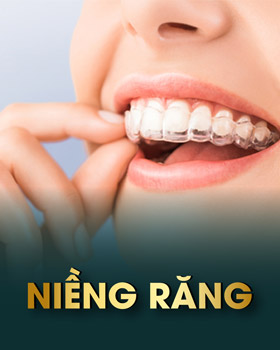
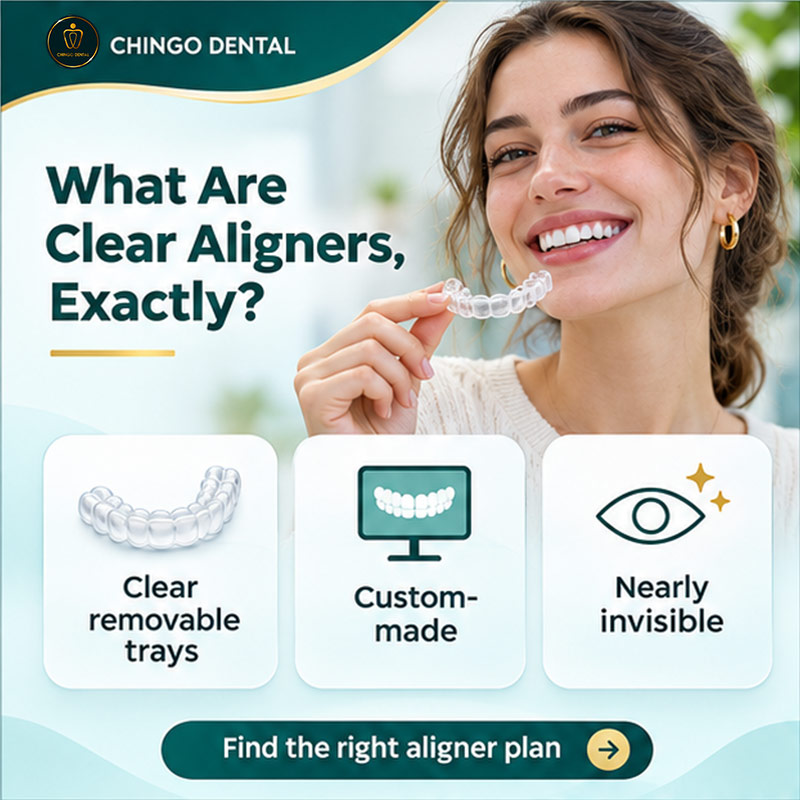
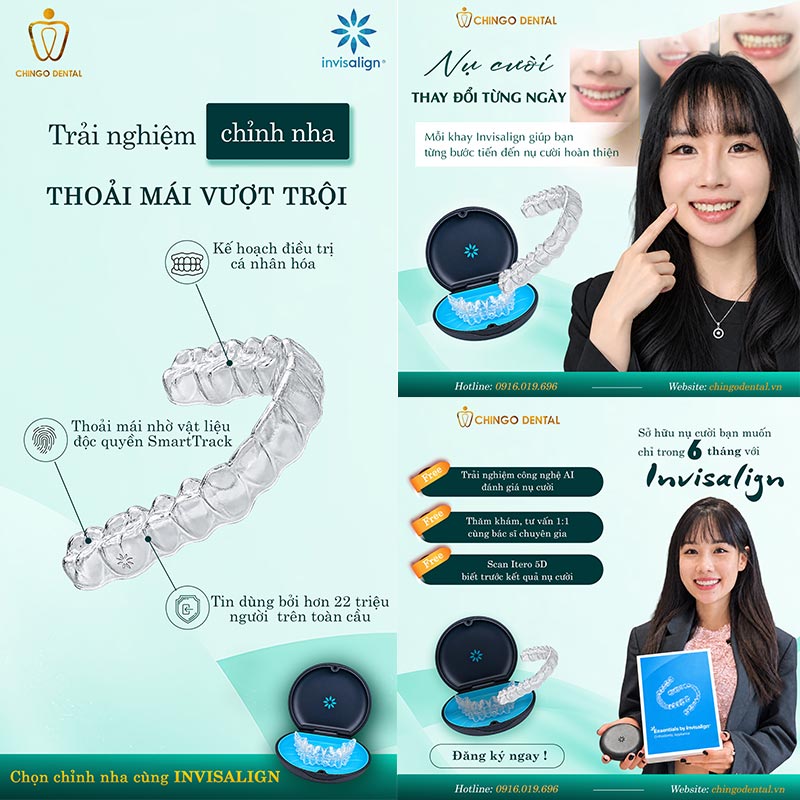
Clear aligners are custom-made, removable trays worn over the teeth. Each set of trays is designed to shift the teeth a small amount in a carefully planned sequence. When you move through the full series, your teeth arrive at their target position.
The trays themselves are made from a medical-grade thermoplastic material smooth, BPA-free, and optically clear. When worn, they sit flush against the teeth and are barely noticeable. This is why the term invisible orthodontics has become so widely used. It accurately describes how discreet the treatment looks from across a table or in conversation.
What sets clear aligners apart from traditional fixed braces is their removability. You take them out to eat, drink, brush, and floss. You put them back in after. That single feature changes the daily experience of orthodontic treatment significantly no food trapped in brackets, no painful wires to adjust, no toothbrush acrobatics.
The global clear aligners market was valued at USD 4.67 billion in 2025 and is projected to reach USD 5.58 billion in 2026, with forecasts pointing to USD 13.65 billion by 2031 at a compound annual growth rate of 19.59% (Mordor Intelligence, 2026). That growth is driven by adults, who represented 74.58% of all clear aligner patients in 2025.
How do clear aligners work? A step-by-step look
Does treatment really start before you put in a single tray?
It does and that preparation phase is one of the most important parts. Modern aligner treatment is entirely digital from the first appointment.
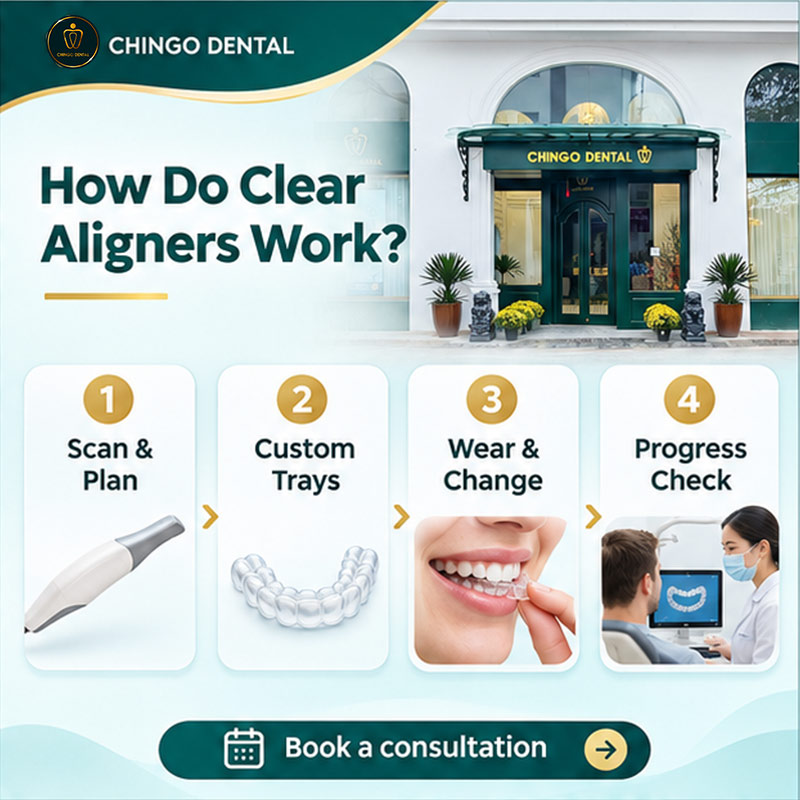
The process begins with a clinical consultation and a 3D digital scan of your teeth and bite. This scan replaces the older method of taking physical impressions with putty, which many patients found uncomfortable. At Chingo Dental, the clinic uses CT Cone Beam 3D technology and Digital Smile Design software, two tools that allow orthodontists to analyze tooth position, bone structure, and soft tissue in a single session. The result is a treatment plan built on precise, complete information rather than estimates.
From that scan, a simulation called ClinCheck is generated. This is a digital animation that shows exactly how your teeth will move from their starting position to their final alignment, step by step. You review and approve this plan before any trays are manufactured. Knowing what your smile will look like at the end, before treatment begins, gives patients a level of confidence that traditional braces simply cannot match.
Once the trays are produced, the typical protocol is to wear each set for approximately one to two weeks before switching to the next. Most patients visit their dentist every six to eight weeks for a progress check, far less frequent than the monthly appointments typically required for fixed braces.
What happens after the last tray?
Finishing your final tray is not the end of treatment, it is the transition point. Some patients need a short series of refinement trays to address minor movements the initial plan did not fully complete. This is normal and expected for more complex cases.
After refinements, every aligner patient moves into retention. This means wearing a retainer typically a thin, clear appliance similar to the aligners themselves, to hold the teeth in their new position while the surrounding bone stabilizes. Skipping this step is the most common reason teeth shift back over time. A good provider will plan for retention from the start and include it in your overall package.
Which clear aligner brands are available in Vietnam?
Is invisalign the only option?
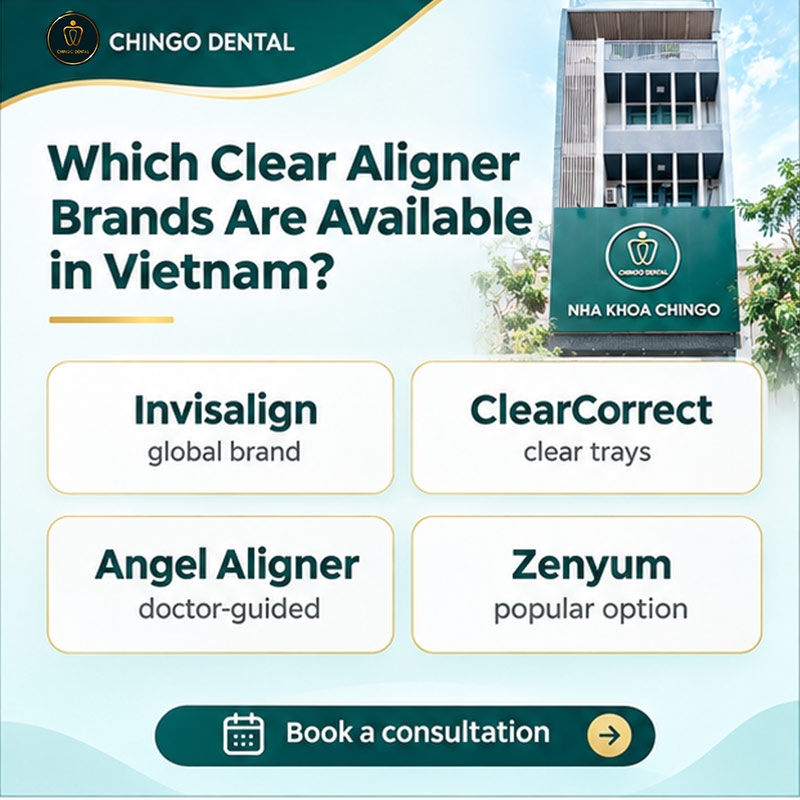
Invisalign is by far the most widely used and clinically validated system globally. Align Technology shipped a record 691,785 Invisalign clear aligner cases in Q2 2026, up 7.4% year over year, with more than 23.5 million patients treated with its system to date (Align Technology, Q2 2026 Earnings Release). No other aligner brand comes close to that body of clinical evidence or the depth of its digital infrastructure.
Within the Invisalign system, there are distinct product tiers for different clinical needs. Invisalign Go is designed for mild, straightforward cases and is well-suited for general dental practices. Invisalign Comprehensive handles full-arch and more complex presentations, including significant crowding, spacing, and bite correction. For younger patients, the Invisalign for Kids system accounts for the particular movement patterns of developing dentitions, though most permanent teeth need to be present before treatment can begin.
One feature worth understanding is the Mandibular Advancement (MA) component, sometimes referred to in searches as “MA Invisalign.” This is a built-in mechanism on certain Invisalign trays that gently positions the lower jaw forward during treatment, addressing a class of bite issues where the lower jaw sits too far back. It is a significant clinical feature that reduces the need for additional appliances.
Provider tier also matters more than many patients realize. Invisalign certifies clinics at different levels Gold, Diamond, and VIP Diamond, based on the number of cases treated per year. A higher-tier provider has completed more cases, has access to a broader range of product options, and has a deeper working relationship with Align Technology’s clinical support team. When evaluating where to get treatment, asking about a clinic’s provider tier is a reasonable and worthwhile question.
Other clear aligner brands exist in the Vietnamese market, including K-Clear aligners, which have gained some regional traction in Southeast Asia. These may be appropriate for mild cases at a lower price point. However, no other system currently matches the clinical documentation, software sophistication, or global support network of Invisalign.
Who is a good candidate for clear aligners?
Does everyone qualify?
Clear aligners perform best for a specific range of cases. Understanding where they excel and where their limits are helps set realistic expectations before you book a consultation.
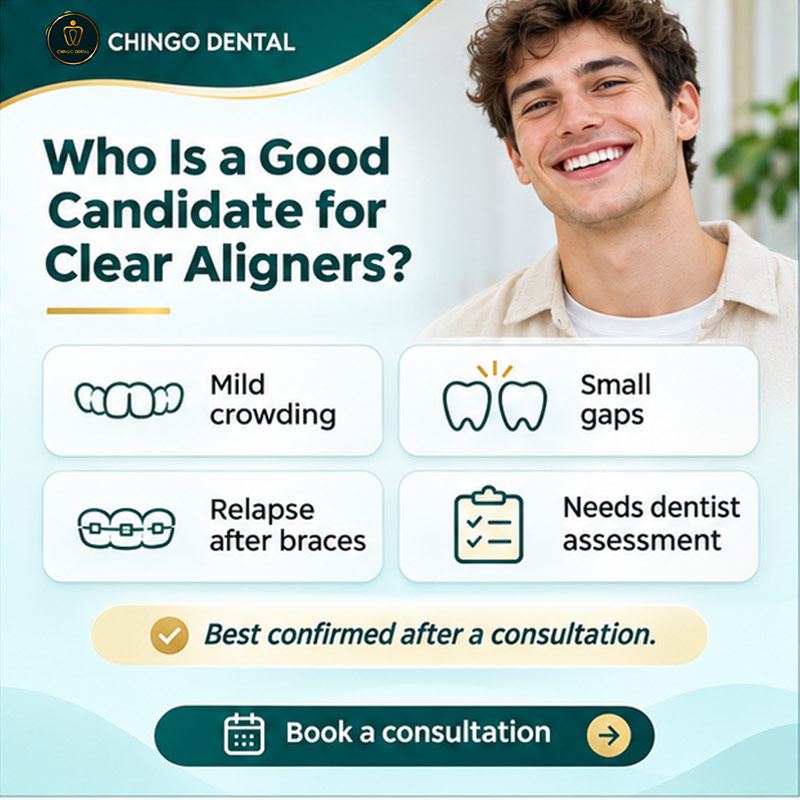
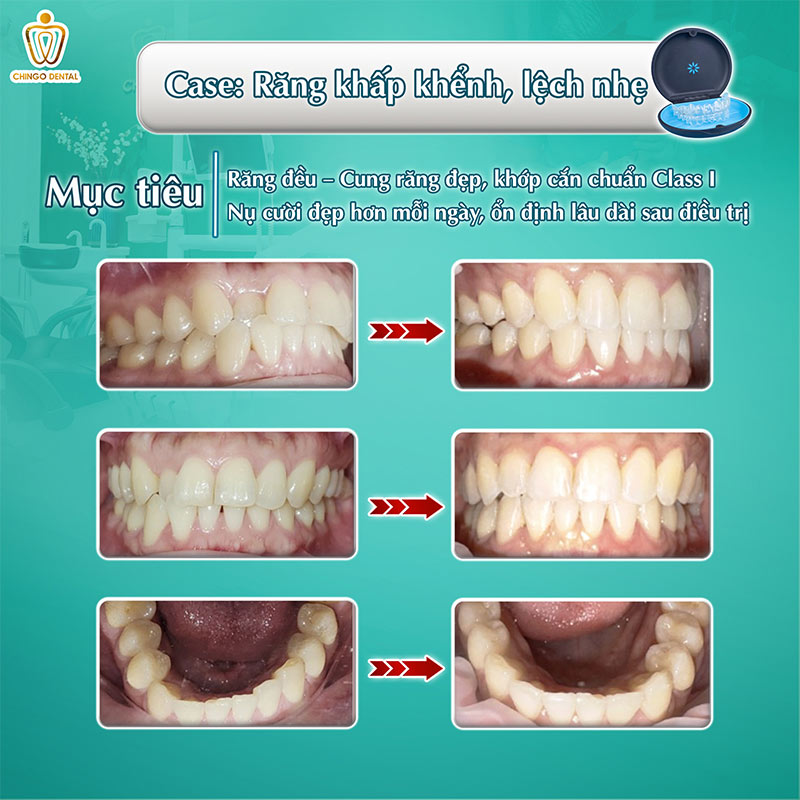
The cases that respond most reliably to aligner treatment include mild to moderate crowding, spacing between teeth, and mild overbite or underbite. These are also some of the most common reasons people seek orthodontic treatment. Adults and teenagers are both strong candidates, and the lifestyle advantages of removable trays make compliance significantly easier for people who have professional or social commitments.
For children, the picture is more nuanced. The Invisalign for Kids system exists and is clinically appropriate in certain cases, but most practitioners will assess whether the eruption of permanent teeth has progressed far enough before recommending clear aligner therapy. Parents interested in this option should request a detailed clinical assessment rather than assuming a child is or is not a candidate.
Cases with severe skeletal discrepancies, where the relationship between the upper and lower jaws needs significant correction, are generally better addressed with fixed appliances or in combination with other treatments. Some rotation patterns on certain teeth also respond more predictably to traditional braces. A well-qualified orthodontist will be direct with you about which approach gives your specific situation the best outcome.
Patients with existing dental restorations crowns, veneers, bridges, often assume they cannot do aligner treatment. In many cases they can, though the planning requires additional consideration. This is exactly the kind of question best answered during a clinical consultation rather than online.
How much do clear aligners cost in Vietnam?
Is invisalign in vietnam affordable compared to other countries?
Cost is consistently one of the first questions people bring to a consultation, and for good reason. Vietnam is a significantly more affordable destination for cosmetic dentistry than the United States, Europe, or Australia not because standards are lower, but because operational costs, labor, and the broader healthcare economy are structured differently.
For context, Invisalign treatment in the United States typically ranges from USD 3,000 to USD 8,000 depending on case complexity and provider. In France, where the term “invisalign prix” appears frequently in search data from French-speaking visitors, costs are similarly high.
In Vietnam, the range is considerably lower for comparable clinical quality. Specific pricing at Chingo Dental is available upon consultation, as the final cost is always case-dependent. What a reputable clinic will always provide, and what you should always ask for, is an itemized breakdown of what the package includes.
A complete aligner package should cover the initial consultation and 3D scanning, all tray fabrication, attachments (if needed), all scheduled follow-up appointments, any refinement trays required, and the final retainer. If any of those elements are absent or priced separately after the fact, ask why. Transparent, all-inclusive pricing is a sign of a clinic that respects its patients’ planning process.
For international visitors and medical tourists considering dentistry in Da Nang or treatment at any point in Vietnam, the value proposition is strong. The cost savings relative to home country pricing typically remain significant even after accounting for travel and accommodation, particularly for comprehensive treatment plans.
What is the day-to-day experience of wearing aligners?
What no one tells you before you start
Most people adapting to aligners find the first three to five days the most challenging. There is mild pressure on the teeth when each new set of trays is inserted, a sensation that reflects the trays actively doing their job. This typically eases within a day or two. Over-the-counter pain relief is sufficient for most patients who find the adjustment uncomfortable.
Speech is another short-term adjustment. Some patients develop a very slight lisp in the first week, particularly with the “s” and “th” sounds. For the vast majority, this resolves completely within a week as the tongue adjusts to the trays. It is a topic worth raising with your provider if you are in a profession where public speaking is frequent.
The rule that governs the entire treatment is straightforward aligners need to be worn for 20 to 22 hours per day. The two to four hours outside of that window are for eating, drinking anything other than plain water, and oral hygiene. This is not a guideline, it is a clinical requirement. Patients who wear their trays for significantly fewer hours per day risk extending their treatment timeline or reducing the precision of their outcome.
Oral hygiene actually becomes easier for many people during aligner treatment. Because the trays are removed before meals, there are no food restrictions and no debris caught in brackets. Brushing and flossing remain straightforward. The main hygiene habit to build is rinsing or brushing before reinserting the trays after meals, which prevents staining and bacterial buildup inside the tray.
One dimension of the experience that rarely features in clinical descriptions is the social and professional dimension. This is likely what drives searches like “invisalign girl”, the genuine question of whether treatment is noticeable to others. The honest answer is that most people around you will not notice. The trays are designed to be optically clear, and from conversational distance, the effect is minimal. Many patients report that friends and colleagues only find out about their treatment when they choose to mention it.

Why choose chingo dental for clear aligner treatment in Vietnam?
What makes one invisalign provider different from another?
The trays themselves come from the same manufacturer regardless of where you go. What differs between providers is the quality of the diagnosis, the precision of the treatment plan, the clinical experience managing complex movements, and the support you receive throughout the process. These are not minor differences, they directly affect your outcome.
Chingo Dental approaches aligner treatment as part of a fully digital clinical workflow. The CT Cone Beam 3D scanner captures a comprehensive picture of your dental anatomy before treatment planning begins. Digital Smile Design software allows the team to simulate your post-treatment appearance and share that simulation with you at the consultation stage. The entire ClinCheck planning process is handled in-house by certified Invisalign providers, meaning you receive a plan reviewed and refined by specialists rather than delegated to a lab.
The team at Chingo Dental is bilingual, clinical staff and patient coordinators communicate fluently in English. For expats based in Vietnam, medical tourists visiting for a week or longer, or anyone navigating cosmetic dentistry in a country where they do not speak the language, this is not a small detail. Clear communication about your treatment plan, your expectations, and your progress makes a measurable difference to the experience.
Pricing at Chingo Dental is transparent and all-inclusive. The package is explained in full before any commitment is made, and there are no itemized surprises introduced part-way through treatment. This approach reflects a broader philosophy that patients make better decisions when they have complete information.
Chingo Dental operates two full-service clinics, one in Hanoi and one in Da Nang. For patients who split their time between Vietnam’s two major urban corridors, or who are visiting for a defined period, this means treatment can begin in one city and continue in another without disruption. Dentistry in Hanoi serves the country’s largest metropolitan population, while dentistry in Da Nang draws a steady stream of international visitors and long-term expats drawn to the coastal lifestyle of central Vietnam.
If you are considering clear aligner treatment and want to understand your specific options, Chingo Dental offers an initial consultation at both locations, an opportunity to receive a clinical assessment and a clear picture of what treatment would involve for your case.
Clear aligners vs. Traditional braces: how do they actually compare?
Is one option objectively better?
Neither is universally better. The right choice depends on the clinical situation and the patient’s lifestyle. What is accurate is that clear aligners are better suited for a broader range of adult patients than was possible with earlier aligner technology, and the category has expanded to handle cases that once required fixed appliances.
The most meaningful practical differences come down to four things: how the treatment looks, how it affects daily routines, how easy it is to maintain oral hygiene, and what range of cases each approach handles.
Clear aligners are nearly invisible. Metal braces are not. For adults in professional environments or social situations where appearance matters, this distinction is significant. Ceramic braces reduce visibility somewhat but still involve brackets bonded to the front of the teeth
Eating with braces means adapting your diet. Sticky foods, hard foods, and anything that could bend a wire or dislodge a bracket all require care. With clear aligners, you remove the trays before every meal. There are no restrictions.
Oral hygiene is more demanding with fixed braces. Brushing around brackets and threading floss under the arch wire takes time and practice. With aligners, your oral hygiene routine is essentially unchanged from before treatment.
Where traditional braces still hold an advantage is in the range of cases they can address. Severe bite discrepancies, significant rotations, and cases involving active growth in younger patients often respond more reliably to fixed appliances. A qualified orthodontist will tell you which approach is clinically appropriate for your situation rather than defaulting to one or the other based on cost or preference.
How to care for your aligners between appointments
What keeps trays clear and hygienic throughout treatment?
Aligner maintenance is straightforward, but it does require consistency. The trays should be cleaned every day, rinsing them under lukewarm water and using a soft toothbrush to remove any residue. Hot water should never be used. Aligners are made from thermoplastic material that can warp at high temperatures, which would compromise their fit and effectiveness.
For a more thorough clean, Invisalign cleaning crystals or unscented retainer cleaning tablets can be used for a soak. Avoid scented soaps or colored cleaning agents, as these can stain the trays or leave a residue.
When the trays are out of your mouth, they should be stored in their case. Loose trays left on a surface are frequently lost or accidentally discarded, a surprisingly common occurrence that most experienced providers will warn you about in advance.
A practical habit worth building from day one: keep your tray case with you whenever you leave the house. This makes the transition before and after meals automatic rather than something you have to arrange.
Frequently asked questions about clear aligners (FQA)
Question 1. What is the difference between Invisalign and clear aligners?
Clear aligners is the broader category, it refers to any transparent, removable orthodontic tray system. Invisalign is the leading brand within that category, made by Align Technology. It is by far the most clinically documented system available, with more than two decades of research and global use behind it.
Question 2. How long does Invisalign treatment typically take?
Treatment duration varies significantly depending on case complexity. Mild cases can complete in as few as six months. Moderate cases typically run between 12 and 18 months. More complex treatment plans may extend to 24 months or longer. Your ClinCheck simulation will show you the full planned timeline before treatment begins.
Question 3. What is Invisalign ClinCheck?
ClinCheck is Invisalign’s proprietary digital treatment planning software. It generates a 3D animated simulation of how your teeth will move across each stage of treatment from start position to final alignment. Patients review and approve this plan before trays are manufactured. It is one of the clearest advantages of the Invisalign system: you see your projected outcome before you commit.
Question 4. What is the difference between Invisalign Go and Invisalign Comprehensive?
Invisalign Go is designed for mild, straightforward cases, typically spacing or mild crowding and is offered at general dental practices as well as specialist clinics. Invisalign Comprehensive addresses the full range of orthodontic presentations, including more significant crowding, bite correction, and complex tooth movements. A clinical assessment will determine which tier is appropriate for your situation.
Question 5. Can children get clear aligner treatment?
The Invisalign for Kids system is specifically designed for younger patients. However, most orthodontists recommend waiting until the majority of permanent teeth have erupted before beginning aligner treatment. The key factor is whether the developing dentition is stable enough to support predictable movement. This is a determination made case by case, not by age alone.
Question 6. Is Chingo Dental a certified Invisalign provider?
Yes. Chingo Dental is a certified Invisalign provider with clinics in both Hanoi and Da Nang. The treating team has completed the required Invisalign certification and manages cases across the full product range, including Invisalign Go and Invisalign Comprehensive. Patients have access to the complete ClinCheck workflow and receive their digital simulation at the planning stage.
Question 7. What does a VIP Invisalign provider designation mean?
Align Technology ranks certified providers based on annual case volume and clinical outcomes. VIP and Diamond-tier providers have treated a significantly higher number of cases per year than entry-level certified providers. Higher volume translates to greater clinical familiarity with complex movements, refinement management, and edge cases, a meaningful differentiator for patients with more involved treatment needs.
Question 8. Are clear aligners painful?
The word “painful” overstates it for most patients. There is typically mild pressure or tightness for the first day or two after each new tray set is inserted. This sensation indicates the trays are applying force, which is exactly what they are designed to do. Most patients manage this comfortably without any medication. The experience is generally reported as less uncomfortable than the wire adjustments associated with traditional braces.
The right provider makes the difference
More than 23.5 million patients have now been treated with the Invisalign system globally, and demand continues to grow at a record pace. The technology has matured significantly, the clinical outcomes are well-documented, and the experience of wearing aligners has become genuinely manageable for most adult patients.
What has not changed is this the quality of the outcome depends more on the provider than on the trays themselves. Diagnosis, treatment planning, follow-through, and clinical experience with complex movements are what separate a result you are proud of from one that requires correction.
Chingo Dental brings certified Invisalign expertise, fully digital clinical planning, bilingual patient care, and transparent pricing together in one practice, available in Hanoi and in Da Nang. If you are ready to find out whether clear aligners are the right fit for your teeth, the first step is a consultation.
Book your free initial consultation with Chingo Dental. Come in with questions. Leave with a clear picture of your options.
Contact Information – Chingo Dental International Cosmetic Dentistry
Chingo Hanoi Branch:
- Address: No. 1, Lane 558 Nguyen Van Cu Street, Bo De Ward, Hanoi City
- Hotline: 0915.217.855 – 0912.391.909 – 0978.090.780
Chingo Da Nang Branch:
- Address: No. 22 Le Hong Phong Street, Hai Chau Ward, Da Nang City Da Nang
- Hotline: 0916.019.696 – 0919.590.326 – 0916.102.552
Opening hours: 8:00 AM – 18:00 PM, all days of the week
Email: info@chingodental.vn
Website: https://chingodental.vn
This article is intended for informational purposes. Individual treatment plans and costs vary based on clinical assessment. Consult a qualified dental professional before making any treatment decisions.