You notice a little blood on your toothbrush. You rinse, move on, and tell yourself it’s nothing. That moment repeated across millions of mornings, is exactly how periodontitis quietly takes hold. By the time most people realize something is genuinely wrong, the damage has already been done beneath the gum line, in places no mirror can show you.
Periodontitis is not just bad gums. It is a progressive bacterial infection that destroys the bone and tissue holding your teeth in place. Left untreated, it leads to tooth loss and according to the World Health Organization, severe periodontitis affects an estimated one billion people worldwide, making it one of the most widespread and undertreated dental conditions on the planet.
The good news is that periodontitis is manageable. Early detection, the right treatment, and consistent follow-through can stop the destruction and preserve your smile for life. This guide walks you through everything you need to know from the first warning signs to what modern treatment actually looks like.
What you will learn in this article:
How to recognize the symptoms of periodontitis before they worsen
What your dentist sees on a periodontitis X-ray and why it matters
Which treatments work at each stage of the disease
What is periodontitis, and how is it different from regular gum disease?
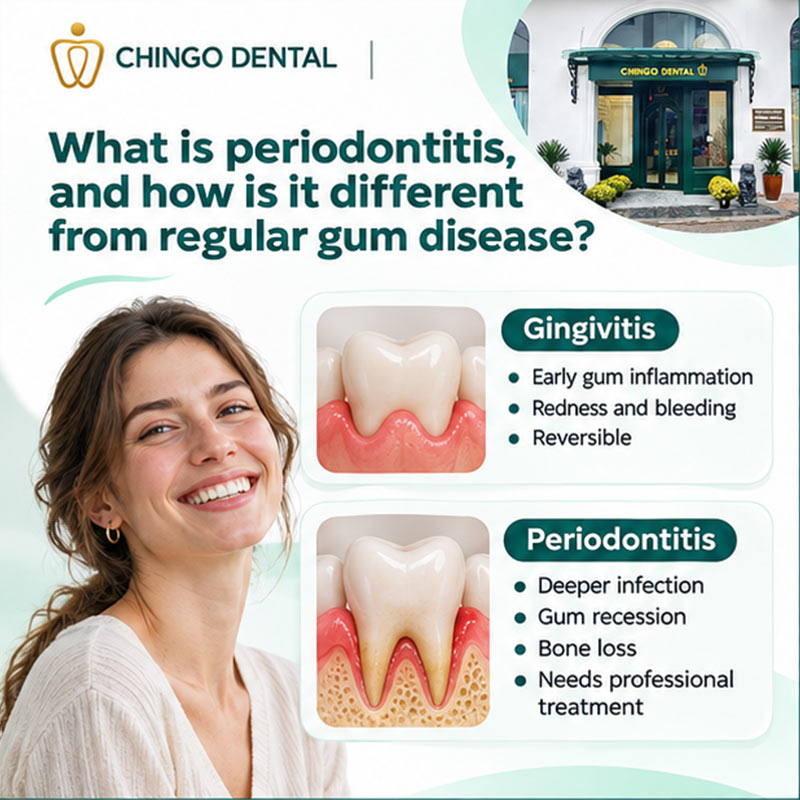
Periodontitis and gum disease are terms people often use interchangeably and for good reason, because one leads directly to the other. Gum disease is the broader category. It starts with gingivitis, a mild inflammation of the gum tissue that is entirely reversible with good oral care. Periodontitis is what happens when gingivitis is not addressed: the infection spreads deeper, penetrates the supporting structures of the tooth, and begins destroying bone and ligament in ways that cannot be undone on their own.
The periodontal disease definition, in plain terms, is this: a serious bacterial infection of the tissues that anchor your teeth the gums, the periodontal ligament, and the jawbone. Once the bone starts to erode, it does not grow back without medical intervention. That is what makes periodontitis fundamentally different from a simple case of inflamed gums.
Understanding this distinction matters because many people assume that if their gums stop bleeding after brushing more carefully for a week, the problem is solved. With gingivitis, that may be true. With periodontitis, the bleeding may ease while the deeper damage continues silently.
How does periodontitis develop? The stages explained
Periodontitis does not appear overnight. It builds over months and years through a predictable sequence, and understanding that sequence helps you recognize where you might be in the process.
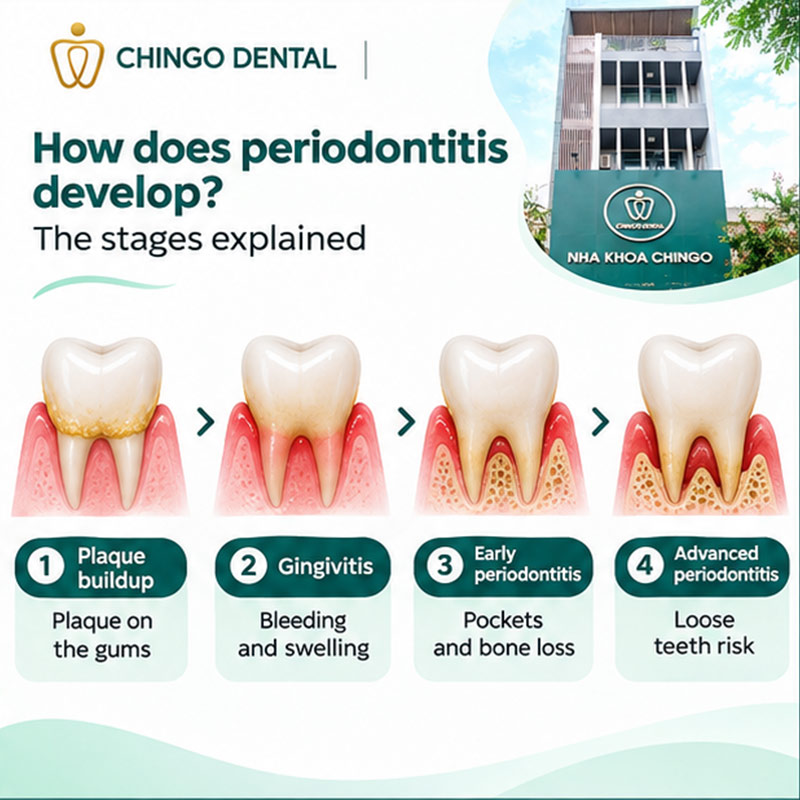
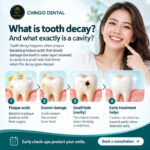
It starts with plaque the sticky film of bacteria that forms on teeth every day. When plaque is not removed consistently, it hardens into tartar (also called calculus) at and below the gum line. Tartar cannot be removed by brushing alone. The bacteria within it release toxins that irritate the gum tissue, triggering inflammation. This is gingivitis the gums are red, swollen, and bleed easily. At this point, the supporting bone is still intact.
When tartar remains undisturbed, the gum tissue begins to pull away from the tooth surface, creating a small gap called a periodontal pocket. This pocket becomes a reservoir for bacteria that thrive in low-oxygen environments below the gum line, far from your toothbrush and floss. The infection deepens. The body’s immune response, while attempting to fight the bacteria, also inadvertently breaks down surrounding bone tissue. The pocket grows deeper. The bone shrinks. The tooth loses its foundation.
A healthy gum pocket measures between one and three millimeters. In moderate periodontitis, pockets can reach five or six millimeters. In severe cases, they exceed eight millimeters deep enough that the roots of the tooth are significantly exposed and the tooth itself begins to shift. What many patients describe as a “hole in gum” is often this visible pocketing or the recession that follows.
Using the 2017 staging system adopted by periodontists worldwide, the disease is classified from Stage I (early attachment loss with minimal bone involvement) through Stage IV (severe bone loss, significant tooth mobility, and compromised chewing function). Each stage requires a different level of intervention.
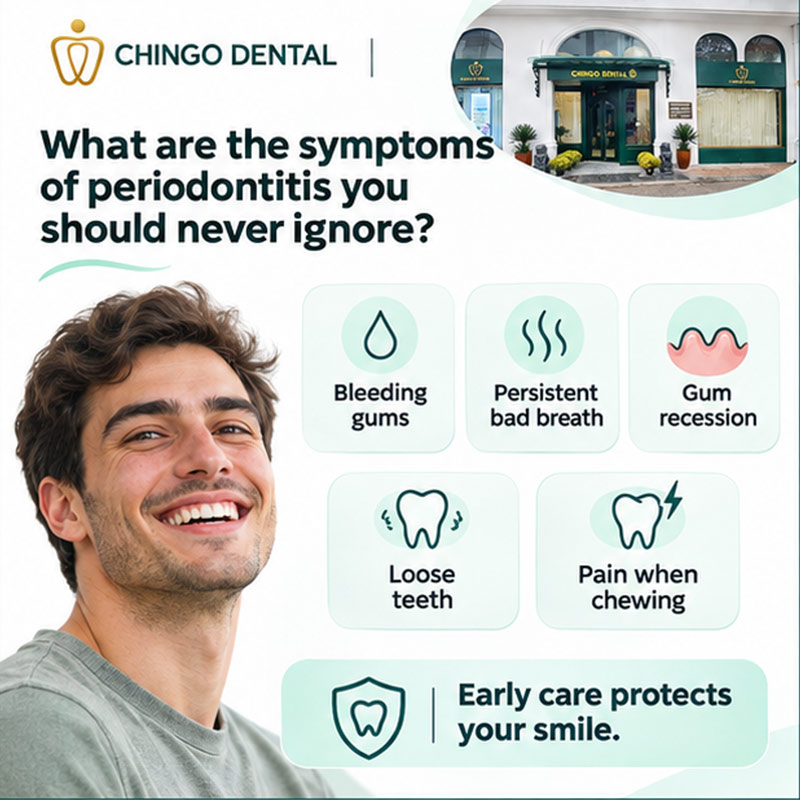
What are the symptoms of periodontitis you should never ignore?
One of the most important things to understand about periodontitis is that it is frequently painless in its early and middle stages. Many patients arrive at a dental clinic unaware they have it at all, having dismissed their symptoms as minor inconveniences for years.
Bleeding gums when brushing is the most recognizable early sign. Healthy gums do not bleed. When they bleed regularly during brushing or flossing, it signals inflammation, the gum tissue is irritated, engorged with blood, and fragile. This symptom alone warrants a periodontal evaluation.
Beyond bleeding, the symptoms of periodontitis include persistent bad breath that does not resolve with brushing or mints. This odor comes from anaerobic bacteria living in deep pockets, producing sulfur compounds continuously. It is not about what you ate, it is about what is living below your gum line.
As the disease advances, gums begin to recede, making teeth appear longer than they used to. Tooth sensitivity increases as roots become exposed. Teeth may feel slightly loose, or you may notice them shifting position over time. In advanced cases, the gum tissue itself takes on a rotten, deteriorated appearance what people sometimes search for as “rotten gums” with visible tissue breakdown and an unpleasant taste in the mouth.
A less obvious but equally important symptom is a change in bite. When teeth shift because bone support is compromised, the upper and lower teeth no longer meet the way they once did. This is a late-stage warning sign that demands immediate attention.
The critical takeaway is this: by the time periodontitis causes significant pain, the structural damage is typically already severe. Do not wait for pain to decide whether your gums need professional evaluation.
What does a dentist look for? Understanding the periodontitis X-ray
When you visit a dentist concerned about your gum health, the examination goes beyond what any patient can observe at home. Two tools are essential to accurate diagnosis: the periodontal probe and the dental X-ray.
The periodontal probe is a thin instrument inserted gently into the gum pocket around each tooth to measure its depth in millimeters. This measurement, taken at multiple points around every tooth, tells the dentist how far the gum has detached from the tooth root and how deep the bacterial infection extends.
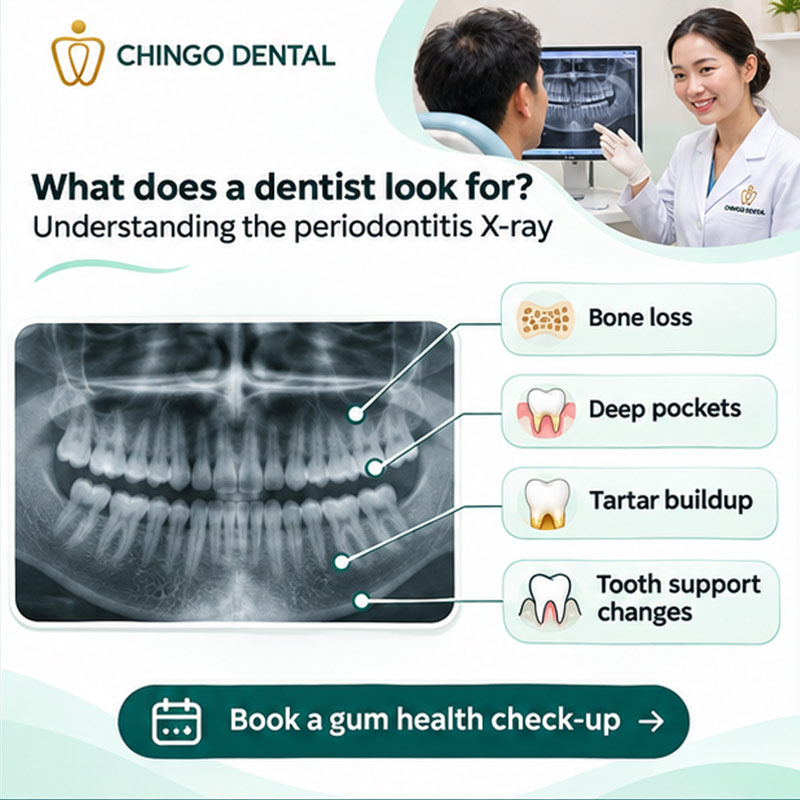
A periodontitis X-ray provides a different but equally critical picture. On a dental radiograph, healthy bone appears dense and reaches close to the neck of each tooth. In a patient with periodontitis, that bone level drops sometimes dramatically. The X-ray reveals horizontal bone loss (even reduction across a broad area) or vertical bone defects (irregular craters beside specific teeth). These patterns are invisible to the naked eye and invisible to the patient, but they are unmistakable on film.
A 2025 study published in Frontiers in Oral Health, analyzing the Global Burden of Disease 2021 dataset across 204 countries, confirmed that the global burden of periodontal diseases rose between 1990 and 2021, driven primarily by population growth and aging. This underscores why comprehensive diagnostic evaluation not just a visual check is essential for anyone over 30.
At Chingo Dental, the diagnostic process goes further than conventional 2D X-rays. Using CT Cone Beam 3D imaging, our clinicians capture a full three-dimensional map of bone levels, pocket depth, and root anatomy around every tooth. This precision imaging reveals bone defects that standard radiographs can miss entirely, allowing for far more accurate staging and treatment planning from the very first visit. For patients seeking dentistry in Hanoi or dentistry in Da Nang, this level of diagnostic technology represents a significant step above the standard of care.
What causes periodontitis, and who is most at risk?
The root cause of periodontitis is bacterial biofilm, the organized communities of bacteria that colonize the gum line when oral hygiene is inconsistent. But bacteria alone do not tell the whole story. The severity and speed of progression are shaped by a range of biological and lifestyle factors.
Smoking is the single most significant modifiable risk factor. Smokers are substantially more likely to develop periodontitis and respond less well to treatment, in part because nicotine restricts blood flow to the gum tissue, impairing both the immune response and healing.
Diabetes creates a bidirectional relationship with periodontal disease that researchers have studied extensively. Elevated blood sugar promotes bacterial growth and impairs healing. At the same time, active periodontitis makes blood sugar harder to control meaning the two conditions amplify each other when either goes untreated.
Genetics plays a meaningful role as well. Some people are inherently more susceptible to aggressive inflammatory responses in the gum tissue. If periodontitis runs in your family, your risk is elevated regardless of how well you brush.
Other contributing factors include hormonal changes during pregnancy and menopause, certain medications that affect gum tissue (such as blood pressure medications and immunosuppressants), chronic stress, and the habit of grinding or clenching teeth, which adds mechanical stress to already-compromised bone.
Researchers have also established links between periodontitis and systemic health conditions beyond diabetes particularly cardiovascular disease and adverse pregnancy outcomes, including preterm birth. These associations reinforce the idea that gum health is not an isolated concern. It is part of your overall health picture.
How to treat periodontal disease: what actually works at each stage
The most common question patients ask after a periodontitis diagnosis is straightforward how do we fix this? The answer depends on how far the disease has progressed, but the core principle is universal eliminate the bacterial infection, halt bone loss, and prevent recurrence.
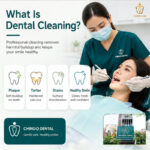
For patients in the early to moderate stages (Stage I and Stage II), the foundation of periodontal disease treatment is a procedure called scaling and root planing. This is a deep cleaning performed below the gum line, using specialized instruments to remove calculus and disrupt the bacterial biofilm from the root surfaces of teeth. It is typically completed over one or two visits, with local anesthetic applied for comfort. After treatment, the gum tissue is given several weeks to heal and reattach to the now-clean root surface.
Research published in the Journal of Periodontology in early 2026, following 56 patients with periodontitis over a 24-month period, found that both standard and enhanced supportive care protocols led to significant improvements in pocket depth, bleeding on probing, and clinical attachment levels after active treatment. The study concluded that consistent follow-up care was a primary driver of sustained outcomes reinforcing that treatment is not a one-time event but an ongoing process.
For patients with moderate-to-advanced disease, surgical intervention is often necessary. Flap surgery involves lifting the gum tissue to directly access and clean deep pockets and reshape irregular bone. Bone grafting procedures can replace lost bone volume to stabilize teeth and, in some cases, prepare the jaw for future dental implants. Guided tissue regeneration uses barrier membranes to encourage the body to rebuild lost attachment structures. Gum grafting covers exposed roots, reducing sensitivity and stopping further recession.
At Chingo Dental, surgical periodontal procedures are performed using Piezotome ultrasonic technology a gentler, more precise alternative to conventional instruments that reduces trauma to surrounding soft tissue and significantly shortens recovery time. Patients consistently report less post-operative discomfort compared to traditional approaches. For anyone exploring cosmetic dentistry or restorative dental services in Da Nang or Hanoi, it is worth knowing that the technology your clinic uses has a direct impact on how quickly you recover and how well your treatment holds.
Regardless of which treatment is used, the maintenance phase is non-negotiable. After active treatment, patients with periodontitis require professional dental cleaning every three to four months not the standard six-month schedule, along with regular re-probing and X-ray monitoring. The bacteria responsible for periodontitis can repopulate treated sites within weeks if home care is inconsistent. Long-term success is built in the months and years after treatment, not just during it.
Can periodontitis be reversed?
This is the question every patient wants answered honestly. The short answer depends on what “reversed” means.
Gingivitis the stage before periodontitis begins is fully reversible. Remove the plaque and tartar, establish good oral hygiene, and the gum tissue returns to health with no lasting damage.
Periodontitis is different. The bacterial infection can be controlled. The inflammation can be resolved. The destruction can be stopped. But the bone and attachment that have already been lost do not regenerate spontaneously. Without regenerative surgical procedures, the structural changes of periodontitis are permanent.
What treatment achieves is remission a stable state in which the disease is no longer active and progression has stopped. Patients in remission can keep their teeth for a lifetime. The key is that remission requires maintenance. Skip your follow-up appointments, return to poor oral hygiene habits, or continue smoking, and the disease will reactivate.
This distinction between reversing periodontitis and managing it, is important because it sets realistic expectations and motivates the right kind of long-term commitment. Many patients, once they understand this, become far more consistent about their three-month maintenance visits than they ever were about their annual check-ups.
What happens if you do not treat periodontitis?
A 2026 study published by the Journal of the American Dental Association projected that the burden of severe periodontitis in the United States will continue to grow through 2050, with an estimated 42 million Americans already affected by severe disease in 2021. The pattern reflects what happens on an individual level as well: without intervention, periodontitis follows a one-way trajectory.
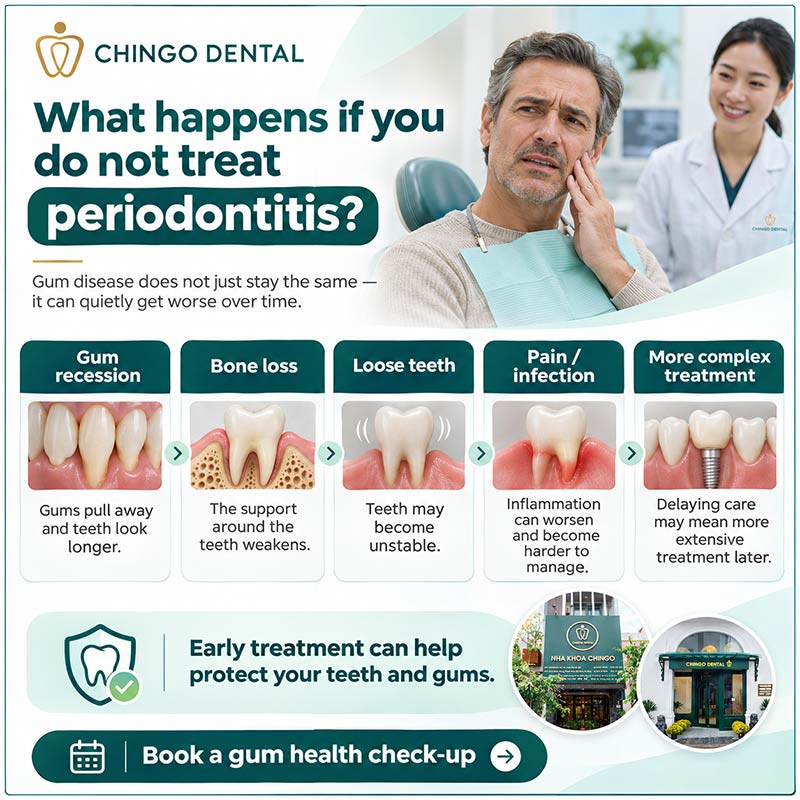
Bone loss progresses. Pockets deepen. Teeth loosen. Eventually, affected teeth become non-restorable and require extraction. As more teeth are lost, the bone that once surrounded their roots continues to shrink, making future implant placement more complex and costly. The longer treatment is delayed, the more limited the options become.
Beyond tooth loss, untreated periodontitis has real implications for overall health. The chronic inflammatory state it creates has been associated with increased cardiovascular risk, difficulty managing blood sugar in diabetic patients, and complications in pregnancy. These are not remote theoretical concerns, they are documented associations that the medical community takes seriously.
For patients who have already experienced tooth loss from periodontitis, the path forward is not closed. After gum disease is brought under control and the mouth is stable, restorative options including dental implants become viable. At Chingo Dental, implant planning is integrated with 3D imaging and CAD/CAM prosthetics to restore both function and aesthetics precisely with transparent pricing discussed fully before any procedure begins. Our clinics in Hanoi and Da Nang serve both local patients and international visitors looking for high-quality cosmetic dentistry combined with personalized care.
How to prevent periodontal disease from starting or returning
Prevention is not complicated, but it requires consistency. The bacteria responsible for periodontitis return to the gum line every day. Prevention is the daily habit of not giving them time to establish themselves.
Brush twice a day using a soft-bristled toothbrush held at a 45-degree angle to the gum line, moving in short strokes. Electric toothbrushes are more effective for most people at removing plaque near the gum margin. Floss or use interdental brushes once daily, this is the step that reaches the spaces between teeth where the majority of periodontal pockets form. No amount of excellent brushing compensates for skipping interdental cleaning.
If you smoke, quitting is the single highest-impact action you can take for your periodontal health. The difference in treatment outcomes between smokers and non-smokers is substantial and well-documented.
Professional cleaning every six months or every three to four months if you have a history of periodontitis allows your dental team to remove tartar buildup before it triggers the inflammatory cycle. For people managing diabetes, keeping blood sugar well controlled reduces susceptibility and improves treatment response. Staying hydrated and limiting sugary foods limits the fuel available to acid-producing bacteria.
If you have a family history of gum disease, tell your dentist. Earlier and more frequent monitoring gives you the best chance of catching any changes before they progress to periodontitis.
Frequently asked questions about periodontitis (FQA)
Question 1. Is periodontitis painful?
In most cases, particularly in the early and moderate stages, periodontitis causes little or no pain. This is precisely what makes it dangerous. Many patients discover they have significant bone loss only during a routine dental exam with probing and X-rays. Pain, when it does appear, usually signals an abscess or advanced tissue breakdown both of which require prompt attention.
Question 2. What does bleeding gums when brushing really mean?
Bleeding gums when brushing is never normal. Healthy gum tissue does not bleed in response to gentle brushing or flossing. Consistent bleeding indicates inflammation, which may be gingivitis (early and reversible) or periodontitis (more advanced). Either way, it is a signal to see a dentist for a full periodontal evaluation rather than to brush more gently and hope the bleeding stops.
Question 3. What is a “hole in gum” and should I be worried?
A visible indentation, pocket, or hole in the gum tissue most often represents a deep periodontal pocket, an abscess, or tissue that has broken down from advanced infection. These do not resolve without professional treatment. If you notice a hole in gum tissue, swelling, or a persistent sore spot, make an appointment promptly.
Question 4. What does periodontitis look like on an X-ray?
On a dental X-ray, periodontitis appears as a lowering of the bone level around tooth roots. In a healthy patient, the bone sits close to the neck of each tooth. In periodontitis, the bone recedes away from the roots horizontally in some areas, in angular defects beside specific teeth in others. The extent of bone loss on the X-ray is one of the primary tools for staging the disease and planning treatment.
Question 5. Can I see a dentist in Vietnam for periodontitis treatment if I am an expat or visitor?
Absolutely. Chingo Dental in Hanoi and Da Nang has an English-speaking team experienced in treating both local and international patients. All consultations are conducted with full transparency you will understand your diagnosis, your treatment options, and the costs involved before anything begins. Whether you are based in Vietnam long-term or visiting for a period, comprehensive periodontal care including 3D diagnostic imaging, ultrasonic treatment, and implant-supported restoration when needed is fully accessible at both locations.
If your gums have been trying to tell you something, now is the time to listen
Bleeding gums when brushing. A persistent bad taste. Teeth that feel different when you bite. These are not inconveniences to manage. They are your mouth’s way of signaling that something below the surface needs attention.
Periodontitis responds to treatment. The earlier it is caught, the simpler and more effective that treatment is. The longer it is left, the more it costs in money, in tooth structure, and ultimately in quality of life.
Chingo Dental offers comprehensive periodontal evaluation at both our Hanoi and Da Nang clinics. The process begins with CT Cone Beam 3D imaging for precise staging, followed by a clear consultation from our bilingual team. There is no pressure, no jargon, and no surprise fees just an honest picture of where your gum health stands and what it will take to protect it. If you have noticed any of the symptoms described in this article, booking an evaluation is the most important thing you can do for your smile today.
Contact Information – Chingo Dental International Cosmetic Dentistry
Chingo Hanoi Branch:
Address: No. 1, Lane 558 Nguyen Van Cu Street, Bo De Ward, Hanoi City
Opening hours: 8:00 AM – 18:00 PM, all days of the week
Email: info@chingodental.vn
Website: https://chingodental.vn
This article is intended for informational purposes. Individual treatment plans and costs vary based on clinical assessment. Consult a qualified dental professional before making any treatment decisions.