
Quick summary:
- A dental bridge is a fixed prosthetic device that replaces one or more missing teeth by anchoring an artificial tooth to the natural teeth on either side of the gap.
- It restores chewing, speech, and aesthetics without surgery.
- There are four main types, traditional, cantilever, Maryland, and implant-supported and the right choice depends on the location of the missing tooth, the condition of surrounding teeth, and your long-term goals.
- This guide covers everything you need to decide with confidence.
Missing a tooth feels like a small problem. Until it isn’t. Within months of a tooth going unreplaced, the neighboring teeth start to drift toward the gap. The opposing tooth above or below can begin to over-erupt. Bone in the jaw slowly deteriorates where the root used to be. What started as one missing tooth quietly turns into a shifting bite, uneven wear, and in some cases, a noticeably changed facial shape.
A dental bridge addresses all of this predictably, affordably, and without a surgical procedure. It is one of the most widely used solutions in restorative dentistry and cosmetic dentistry, and for good reason. According to a 2025 market analysis by Fortune Business Insights, the global dental bridges market was valued at USD 1.11 billion in 2025, reflecting consistent worldwide demand as more adults prioritize restoring their smiles and oral function.
This guide walks through everything what a dental bridge actually is, which type suits which situation, what the procedure involves, how much it costs, and how it compares to other options. If you are weighing your choices and want a clear picture before your first consultation, start here.
What exactly is a dental bridge?
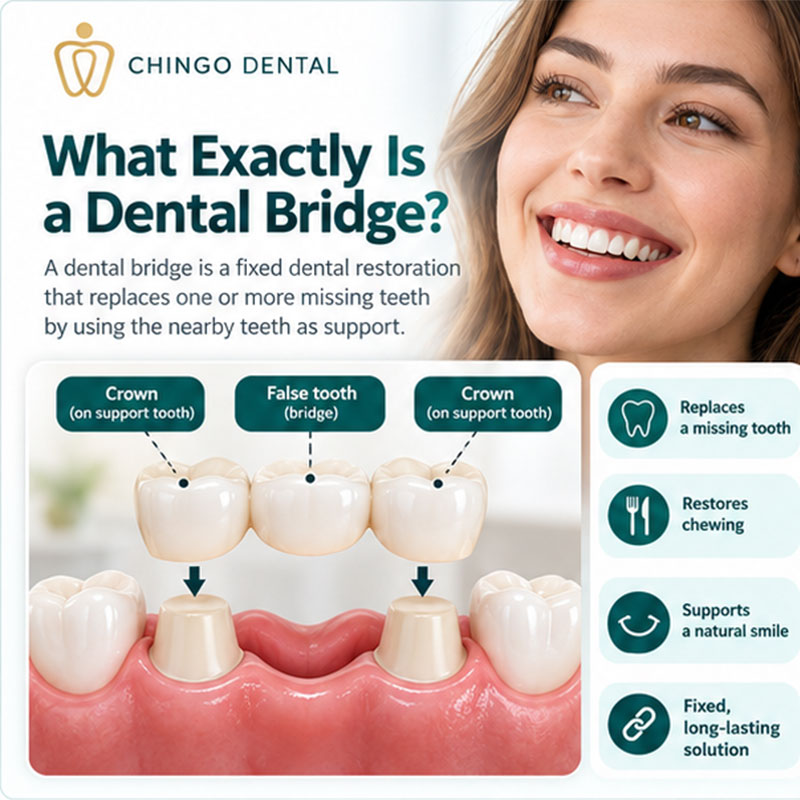
A dental bridge is a fixed dental restoration fixed meaning it stays in your mouth permanently, not removed at night like a denture. It bridges the gap left by one or more missing teeth using an artificial tooth, called a pontic, held in place by dental crowns fitted over the natural teeth on either side of the gap. Those supporting teeth are called abutment teeth.
The three components work together as a single unit. The crowns grip the abutment teeth like a sleeve. The pontic hangs in the space where the missing tooth was, making full contact with the gum line. To the eye and to the touch of your tongue, it feels and looks like a natural tooth.
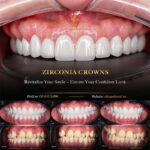
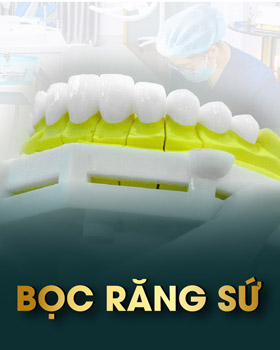
Modern bridges made from materials like zirconia or emax porcelain are virtually indistinguishable from natural teeth in both color and translucency. They restore the full bite surface, allow normal eating and speaking, and can hold up for well over a decade with the right care.
A dental bridge is not just a cosmetic fix. It is a functional restoration that preserves the alignment, health, and stability of everything around it.
Who actually needs a dental bridge?
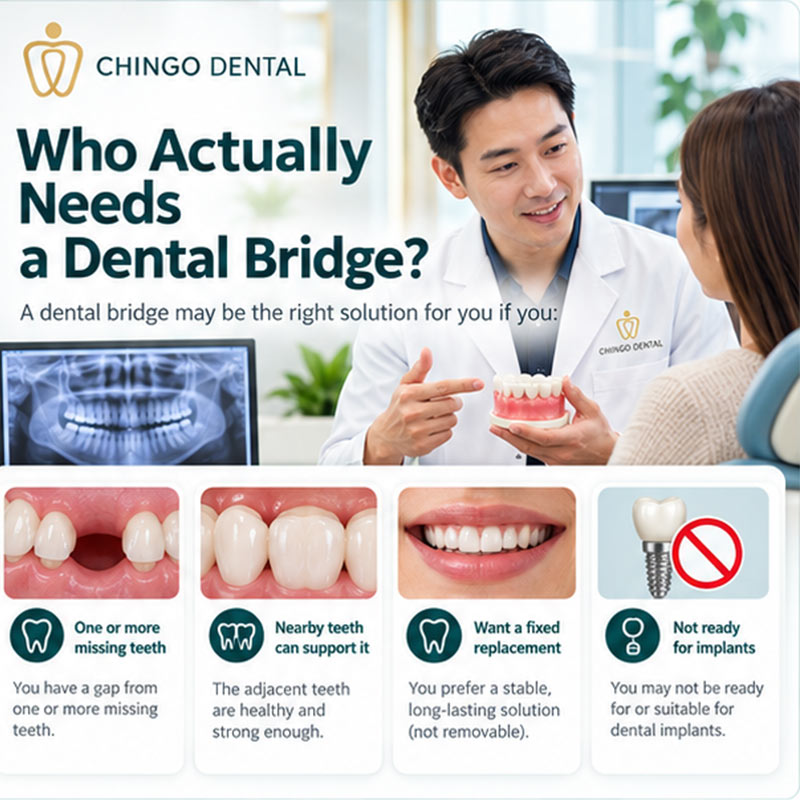
The most straightforward candidate is someone who has lost one to three consecutive teeth and has healthy natural teeth on both sides of the gap to serve as anchors. But the picture is a little more nuanced than that
A dental bridge tends to be the right conversation to have when the neighboring teeth are strong and decay-free, when the patient prefers a non-surgical treatment, or when the timeline for replacement needs to be shorter typically one to two weeks rather than several months.
It is also worth considering when the adjacent teeth already need crowns for other reasons. In that case, the bridge simply incorporates the restoration those teeth needed anyway, making it a particularly efficient solution.
There are situations where a bridge is not the best path forward. Active gum disease needs to be treated first. If the abutment teeth are structurally compromised, they may not bear the load of supporting the bridge long-term. And if the missing tooth is at the very end of the arch with no natural tooth behind it to anchor to, a traditional bridge cannot be placed. In those cases, a dental implant is usually the more appropriate choice.
The honest answer is that the right treatment is never one-size-fits-all. A thorough examination ideally with 3D imaging to assess bone and root structure is what determines the best path for each individual.
What are the different types of dental bridges?
Not all dental bridges are built the same way. The type that works best depends on where the gap is, how many teeth are missing, and the condition of the surrounding teeth.
Traditional Dental Bridge
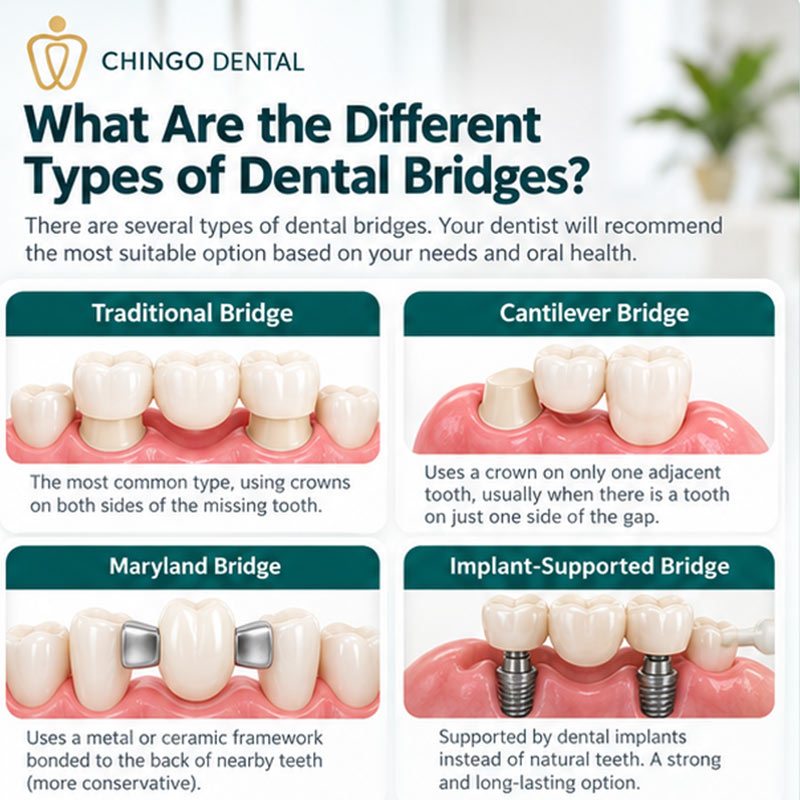
This is the most commonly placed type. A traditional dental bridge uses two dental crowns cemented onto the abutment teeth, with the artificial pontic suspended between them. It is the go-to choice when healthy natural teeth exist on both sides of the gap.
The advantage is reliability. Traditional bridges handle bite forces well, last 10 to 15 years with proper care, and are suitable for both front and back teeth. The trade-off is that the abutment teeth need to be reshaped a small but irreversible step to make room for the crowns.
Cantilever Bridge
A cantilever bridge is anchored to only one abutment tooth instead of two. This design is used when a natural tooth exists on only one side of the gap. It is less common today because the single abutment bears the full load of the bite, which can cause stress over time. Cantilever bridges are generally reserved for lower bite-force areas, such as the front teeth.
Maryland Bridge (Resin-Bonded Bridge)
The Maryland bridge takes a more conservative approach. Instead of full crowns, it uses thin porcelain or metal wings bonded to the backs of the adjacent teeth. There is no grinding of the abutment teeth, which preserves their natural structure.
This makes the Maryland bridge a good option for front teeth, particularly in younger patients or situations where the neighboring teeth are healthy and should not be altered. The limitation is durability, the bonded wings can debond under heavy bite pressure, making this less suitable for back molars.
Implant-Supported Bridge
When multiple consecutive teeth are missing and no natural teeth are available to serve as abutments, an implant-supported bridge provides a strong solution. Rather than resting on natural teeth, the bridge is anchored to titanium implants placed in the jawbone.
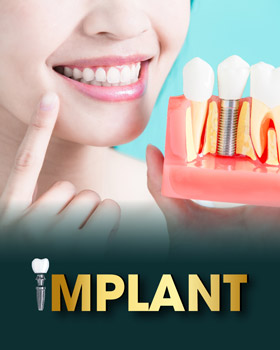
This is the most durable option and the only type of bridge that helps preserve the jawbone beneath the gap. It does involve a surgical phase for implant placement, making the treatment timeline longer. However, it avoids placing any stress on neighboring natural teeth and is often the most biomechanically sound choice for patients missing three or more consecutive teeth.
Which bridge material should you choose?
Material selection shapes the outcome in ways that go beyond appearance. It affects how long the bridge lasts, how it responds to daily bite forces, and how naturally it blends into your smile.
Porcelain-Fused-to-Metal (PFM)
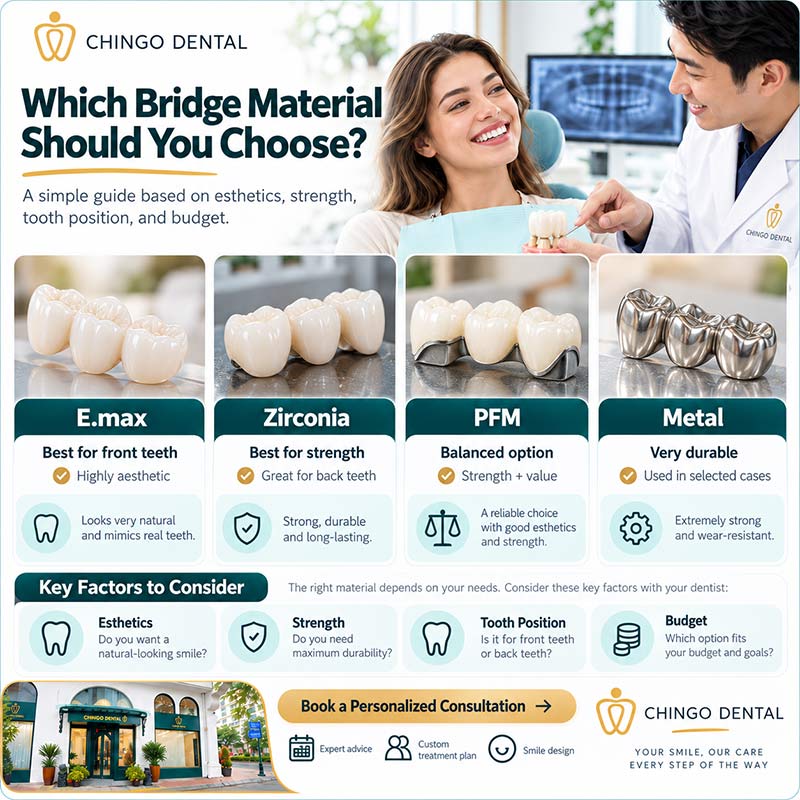
PFM bridges have a metal substructure covered with a layer of tooth-colored porcelain. They are strong and cost-effective, and they have a long clinical track record. The known limitation is that the metal margin can become visible at the gum line over time, particularly in patients with gum recession. PFM remains a practical choice where aesthetics are less critical for example, back teeth that are rarely visible.
All-Ceramic and Lithium Disilicate (Emax)
All-ceramic bridges eliminate the metal entirely, allowing light to pass through the material the same way it does through natural enamel. This translucency makes them excellent for front teeth where aesthetics are the priority. Emax (lithium disilicate) is one of the most refined materials in this category, offering both strength and an exceptionally lifelike appearance.
Zirconia
Zirconia is currently the gold standard for strength in ceramic dental restorations. It is a metal-free material with a flexural strength far exceeding traditional porcelain, making it suitable for both front and back teeth, including high-stress molar positions. It is biocompatible, resistant to staining, and maintains its color stability over many years.
Clinical evidence backs this up. A five-year evaluation of zirconia bridges published in a peer-reviewed UK study found that 97% of placed bridges were performing satisfactorily at the five-year mark, with no framework fractures recorded. More recent research published in the Journal of Functional Biomaterials in 2025 confirmed that optimizing bridge parameters in zirconia prostheses significantly extends clinical longevity.
At Chingo Dental, zirconia bridges are fabricated using CAD/CAM digital milling technology. This means every bridge is designed on a computer based on precise digital scans of the patient’s mouth, then milled from a solid zirconia block to exact specifications. The result is a fit that is consistently accurate something that matters enormously for long-term comfort and the health of the gum around the bridge.
What does the dental bridge procedure actually involve?
Most dental bridge treatments are completed in two to three visits over the course of one to two weeks. The process is well-established and predictable.
Consultation and Examination
The first step is a comprehensive assessment. This includes a clinical examination of the gum tissue, the abutment teeth, and the bite. X-rays are standard. At Chingo Dental, CT Cone Beam 3D imaging is available for cases where a more detailed view of bone structure and root positioning is needed particularly useful when an implant-supported bridge is being considered.
This visit also covers material selection, bridge type, and cost. Patients receive a complete treatment plan in writing before anything begins.
Tooth Preparation
At the second visit, the abutment teeth are reshaped under local anesthetic. A small amount of enamel is removed to create space for the crowns. Digital or physical impressions of the prepared teeth are then taken and sent to the dental laboratory. A temporary bridge is placed over the prepared teeth to protect them while the permanent restoration is being made.
Fabrication
The permanent bridge is custom-fabricated in the dental laboratory, typically over three to seven business days. For zirconia and emax bridges at Chingo Dental, CAD/CAM technology is used at this stage, the digital scan of the prepared teeth feeds directly into the milling process, producing a bridge that fits precisely without the guesswork of traditional hand-fabrication.
Fitting and Final Placement
At the final visit, the temporary bridge is removed and the permanent one is tried in for fit, bite, and color match. Minor adjustments are made if needed. Once everything checks out, the bridge is permanently cemented. Post-placement care instructions are given, and a follow-up appointment is typically scheduled for a few weeks later.
Most patients leave this appointment eating and speaking normally, with an adaptation period of just a few days.
What are the real benefits of getting a dental bridge?
The clinical case for a dental bridge goes beyond the obvious. Yes, it restores the visible gap in your smile. But the more important benefits are functional and long-term.
Chewing is restored immediately. Many patients avoid certain foods for months after tooth loss hard fruits, chewy proteins, anything that puts pressure near the gap. A bridge restores full bite function across the area, and most patients report returning to their normal diet within days of the final cementation.
Speech is often improved as well. Missing teeth particularly front teeth can affect articulation. The tongue uses teeth as reference points for certain sounds, and gaps change the airflow and positioning involved. A bridge corrects this without any additional intervention.
Crucially, a dental bridge prevents the gradual collapse of the dental arch. Without something in the gap, neighboring teeth drift. Over months and years, this drift can misalign the entire bite, cause premature wear on opposing teeth, and create pockets where gum disease can develop. A bridge stops that process entirely.
From a timeline perspective, the dental bridge is also one of the fastest pathways to a permanent tooth replacement. A traditional bridge can be completed in under two weeks from first consultation to final placement, considerably faster than a dental implant, which typically takes three to six months from surgery to crown placement.
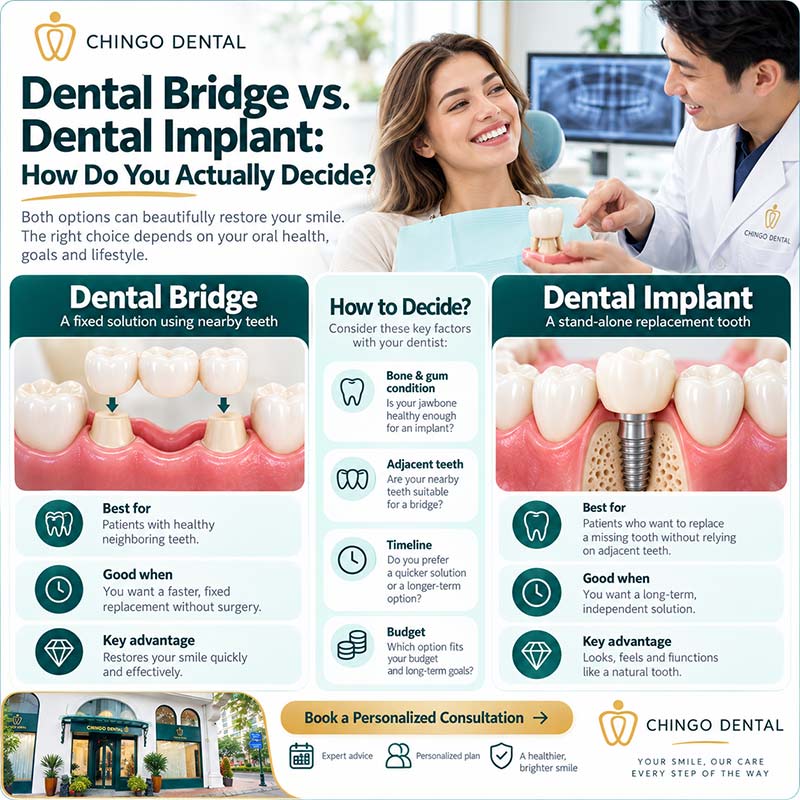
Dental bridge vs. Dental implant: how do you actually decide?
The dental bridge vs. implant question is what most patients arrive with, and it deserves a direct, honest answer rather than a blanket recommendation.
Both are excellent solutions in restorative dentistry, and both have a strong evidence base. The difference lies in how they work and what they prioritize.
A dental bridge is non-surgical, faster, and less expensive upfront. It achieves excellent functional and aesthetic results. The trade-off is that it requires reshaping the adjacent abutment teeth and, unlike an implant, does not replace the tooth root, meaning the jawbone beneath the gap will gradually reduce in density over time as it is no longer stimulated.
A dental implant preserves the bone, does not affect neighboring teeth, and has a longer projected lifespan. The trade-off is a surgical procedure, a longer treatment timeline, and a higher initial investment.
The decision is not about which option is better in the abstract. It comes down to the clinical reality in front of you.
A bridge tends to make more sense when the adjacent teeth already need crowns, when there is insufficient bone for implant placement without grafting, when the patient wants to avoid surgery, or when the timeline is a priority. An implant tends to be preferable when the neighboring teeth are perfectly healthy and should not be touched, when long-term bone preservation is a key goal, or when the patient has a longer-term investment mindset.
According to clinical guidance published in April 2026, the decision should always be made following a thorough examination, not based on cost alone or a general preference. The same clinical source notes that shared decision-making, where the dentist provides clear information and the patient chooses based on their own priorities, leads to better outcomes and higher satisfaction.
At Chingo Dental, both options are presented transparently at the consultation, including itemized cost estimates for each. The recommendation is based on the clinical picture, not on which treatment has a higher margin.
How long does a dental bridge last?
A well-made dental bridge, kept clean and examined regularly, lasts between 10 and 15 years as a general range. Zirconia bridges, given their superior fracture resistance, consistently sit at the upper end of this range and often exceed it in clinical practice.
Several factors determine whether a bridge reaches its full potential lifespan. Oral hygiene is the most important. Plaque that accumulates under the pontic and around the crown margins can cause decay in the abutment teeth and if an abutment tooth fails, the bridge fails with it. Regular professional cleanings, typically every six months, allow a dentist to monitor the margins and catch any early issues before they become structural problems.
Bite forces matter too. Patients who grind or clench their teeth place much higher stress on both the bridge material and the abutment teeth. A custom-fitted night guard significantly extends the lifespan of any fixed restoration, including bridges. Hard foods ice, hard candy, crusty bread bitten with full force should also be avoided as a general habit, not because a well-made bridge is fragile, but because no fixed restoration benefits from unnecessary high-impact stress.
Diet, smoking, and gum health all play supporting roles. Patients who maintain healthy gums, attend regular check-ups, and keep the area around the bridge clean can realistically expect their restoration to outlast the average quoted lifespan.
How do you clean and care for a dental bridge?
Dental bridge care starts the day your permanent restoration is cemented not just when something feels wrong. Consistent aftercare is what determines whether your bridge reaches 10 years or 15. Standard brushing twice a day is not enough on its own when you have a dental bridge. The area under the pontic the space between the artificial tooth and the gum is where food debris and plaque accumulate most. Because floss cannot simply thread down between teeth the way it can elsewhere, this area requires a slightly different approach.
A floss threader or a bridge floss is the standard tool. It works by passing a stiff end of floss under the pontic, allowing you to clean the gum-facing surface of the artificial tooth and the margins of the crowns on either side. This step takes an extra 60 to 90 seconds per day and makes a significant difference in the long-term health of the abutment teeth.
A water flosser (oral irrigator) is an excellent complement, particularly for patients who find floss threading awkward. The pulsed water stream cleans under the bridge effectively and massages the gum tissue around the margins.
Interdental brushes sized to fit the gap under your bridge are another practical option. Your dentist or hygienist at Chingo Dental will demonstrate which size fits best at your fitting appointment.
An antibacterial mouthwash adds a final layer of protection, reducing the bacterial load around the crown margins where the bridge meets the natural tooth surface.
At the six-month check-up, a professional cleaning will access surfaces that home tools cannot reach, and the dentist will check the integrity of the cement seal, the condition of the abutment teeth, and any early signs of gum recession around the bridge.
Cosmetic dentistry
How much does a dental bridge cost in Vietnam?
Cost is often the deciding factor and Vietnam, including both dentistry in Hanoi and dentistry in Da Nang, offers considerable savings compared to Western markets without compromising on materials or technology.
The table below reflects general price ranges for dental bridge treatment in Vietnam based on material type. These are indicative figures; the exact cost depends on the number of units in the bridge, the complexity of the case, and the specific clinic.
|
Material |
Approx. Cost in Vietnam |
Approx. Cost in the US/Australia |
|
PFM Bridge (3-unit) |
USD 300 – 500 |
USD 2,500 – 4,500 |
|
All-Ceramic / Emax (3-unit) |
USD 500 – 800 |
USD 3,500 – 6,000 |
|
Zirconia Bridge (3-unit) |
USD 600 – 1,200 |
USD 4,000 – 8,000 |
|
Implant-Supported Bridge |
USD 1,500 – 3,000 |
USD 8,000 – 15,000 |
For many international patients visiting Vietnam for dental treatment, the cost difference alone covers flights, accommodation, and the full cost of treatment with money to spare. This is why dental tourism in both Hanoi and Da Nang has grown consistently over the past several years.
At Chingo Dental, every patient receives a fully itemized written estimate before treatment begins. There are no hidden fees, no surprise additions, and no pressure to upgrade. If the quote changes at any point, the reason is explained before any additional work proceeds.
Why do international patients choose Chingo Dental for their dental bridge?
Chingo Dental operates two clinics – one in Hanoi and one in Da Nang and serves both Vietnamese patients and a growing number of international visitors seeking high-quality cosmetic dentistry in Vietnam at accessible prices.
What distinguishes the experience at Chingo Dental is not a single feature but a combination that is hard to find in one place.
The clinical technology is current. CT Cone Beam 3D imaging provides a detailed three-dimensional view of the jaw, bone, and root structures before any preparation begins. This level of diagnostics removes guesswork from treatment planning and reduces the risk of complications, particularly relevant for implant-supported bridges where bone volume is a critical variable.
All fixed restorations, including dental bridges, are fabricated using CAD/CAM digital milling. The precision of a digitally milled zirconia bridge in terms of marginal fit, bite alignment, and contact points is measurably better than hand-fabricated alternatives. Patients feel this difference in comfort and in how the bridge settles over the first few days after placement.
Digital Smile Design is available for patients who want to preview their result before committing to treatment. This is especially valued by cosmetic dentistry patients replacing visible front teeth, where the aesthetic outcome matters most.
The clinical team is bilingual. English-speaking dentists and treatment coordinators are available throughout the process from the initial consultation to post-treatment questions answered by email or phone. For patients visiting from overseas, this removes the uncertainty of communicating complex dental decisions across a language barrier.
Pricing is transparent from the first appointment. The quote is complete, itemized, and provided in writing. Patients visiting from abroad for dentistry in Hanoi or dentistry in Da Nang can plan their trip with a clear budget before they board the plane.
Frequently asked questions about dental bridges (FQA)
Question 1. Is getting a dental bridge painful?
The preparation appointment involves reshaping the abutment teeth under local anesthetic. Most patients feel pressure but no pain during the procedure itself. Some sensitivity in the prepared teeth is normal for a few days afterward and resolves on its own. The final fitting and cementation appointment is typically pain-free.
Question 2. How many visits does a dental bridge require?
A traditional dental bridge is usually completed in two to three visits over one to two weeks. The first visit covers examination and planning, the second covers tooth preparation and temporary bridge placement, and the third covers final fitting and permanent cementation.
Question 3. Can I eat normally with a dental bridge?
After a short adaptation period of a few days, most patients eat completely normally. Hard, extremely sticky, or chewy foods are worth approaching with some care as a general habit, not because the bridge is fragile, but because these foods stress any dental restoration unnecessarily. Most patients find this is a minor adjustment.
Question 4. Will my dental bridge look natural?
With zirconia or emax materials, the answer is yes for the vast majority of patients. Color matching is done carefully before the bridge is fabricated, taking into account the shade of the surrounding natural teeth. Modern ceramic materials also mimic the light-reflecting properties of natural enamel, so the bridge does not appear opaque or flat in the way older materials sometimes did.
Question 5. What happens if I don’t replace a missing tooth at all?
Leaving a gap unfilled sets off a slow but cumulative chain of consequences. The neighboring teeth drift. The opposing tooth over-erupts into the space. The jawbone in the area gradually resorbs from lack of stimulation. Over years, this can alter the bite significantly, cause uneven tooth wear, and change the shape of the lower face. Replacing a missing tooth promptly regardless of the method avoids all of this.
Question 6. Can a dental bridge be done in one day?
Some clinics offer same-day bridges using in-house CAD/CAM milling. Whether this is available depends on the clinic’s laboratory setup. At Chingo Dental, the standard timeline is one to two weeks to allow for quality control and precise fabrication. Patients who need a faster turnaround can discuss options at the initial consultation.
Question 7. How do I know when my bridge needs to be replaced?
Signs include looseness or movement in the bridge, sensitivity in the abutment teeth, visible gaps or dark lines at the crown margins, or discomfort when biting. Regular six-month check-ups catch most issues before they become symptomatic. A bridge that is well cared for often does not announce its end of life, it simply shows up at a check-up as a restoration due for replacement.
Ready to restore your smile?
A dental bridge is one of dentistry’s most established and dependable solutions. It is faster than an implant, more stable than a partial denture, and with today’s materials aesthetically excellent. The right bridge, placed by an experienced team using precise technology, can restore your full bite, your confidence, and the long-term health of your surrounding teeth.
The team at Chingo Dental in Hanoi and Da Nang is here to walk you through your options from the very first appointment. Whether you are a local patient or traveling to Vietnam for dental treatment, you will receive a complete, honest assessment of your situation, a written quote before anything begins, and care delivered by an English-speaking team that understands what you need.
Book your free consultation with Chingo Dental today and take the first step toward a complete, confident smile.
Contact Information – Chingo Dental International Cosmetic Dentistry
Chingo Hanoi Branch:
- Address: No. 1, Lane 558 Nguyen Van Cu Street, Bo De Ward, Hanoi City
- Hotline: 0915.217.855 – 0912.391.909 – 0978.090.780
Chingo Da Nang Branch:
- Address: No. 22 Le Hong Phong Street, Hai Chau Ward, Da Nang City Da Nang
- Hotline: 0916.019.696 – 0919.590.326 – 0916.102.552
Opening hours: 8:00 AM – 18:00 PM, all days of the week
Email: info@chingodental.vn
Website: https://chingodental.vn
This article is intended for informational purposes. Individual treatment plans and costs vary based on clinical assessment. Consult a qualified dental professional before making any treatment decisions.