
Why does your dentist keep telling you to come back every six months even when your teeth look fine? The answer is simple. Dental cleaning removes the plaque and tartar that brushing alone can never reach, and it is the single most effective habit for protecting your smile over the long run. If you live in Vietnam or you are visiting for a few weeks, finding a reliable dental cleaning service should not feel like guesswork.
In short, this guide will help you understand what dental cleaning actually involves, how much it costs in Vietnam, and where to find trustworthy teeth cleaning near you in Hanoi or Da Nang. We will also walk through the difference between basic scaling and the newer air flow dental cleaning method, so you know exactly what to expect before you sit in the chair.
What is dental cleaning?
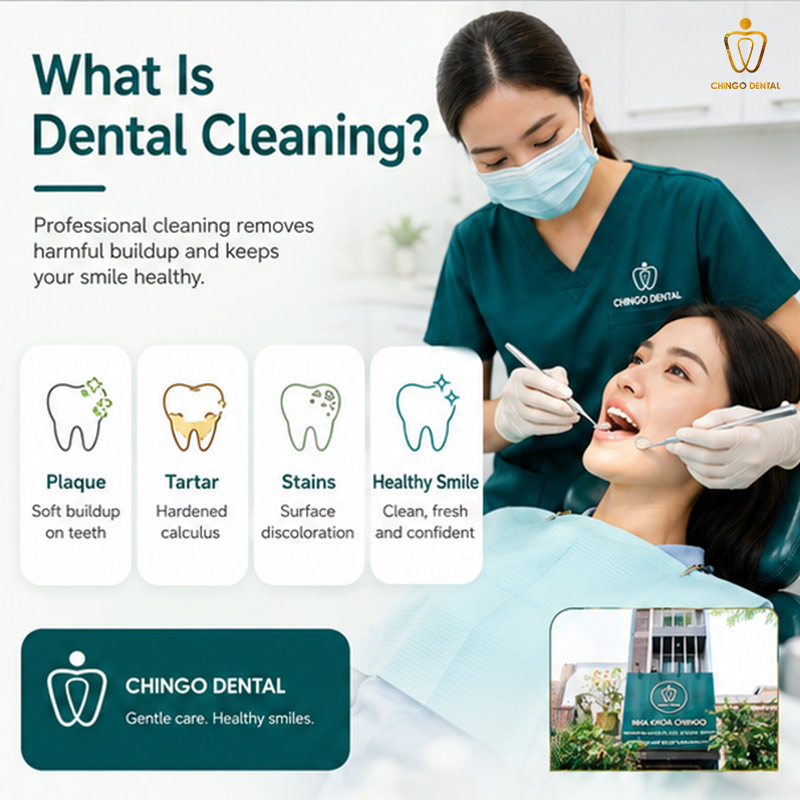
Dental cleaning is a professional oral cleaning procedure performed by a dentist or dental hygienist to remove plaque, tartar, and surface stains that accumulate on your teeth over time. Unlike brushing at home, dental cleaning uses specialized instruments to reach areas your toothbrush simply cannot access, especially along the gum line and between teeth.
Many patients confuse a simple polish with a full dental scale. A dental scale refers to the precise process of scraping away hardened tartar deposits using either manual tools or ultrasonic devices. Some patients ask their dentist about scaler teeth instruments specifically, curious whether the tool itself makes a difference. It does, since ultrasonic scalers tend to be gentler on enamel than older manual versions, and most modern clinics in Vietnam have already switched over. This is different from a teeth check up, which usually includes an examination of your overall oral health, X-rays if needed, and a discussion of any concerns before the actual cleaning begins.
Another term you may come across is dental tartar removal, which is essentially the clinical name for the same process most people simply call scaling. Whether your dentist describes it as tartar removal, scaling, or dental tartar removal on the invoice, the underlying procedure is identical, and the price should not differ just because of the wording used.
At Chingo Dental, every dental cleaning appointment starts with a short consultation. Our dentists look at your gum health, check for cavities, and only then proceed with the appropriate cleaning method. This sequence matters because skipping the assessment step is one of the most common reasons patients feel surprised by unexpected costs or discomfort later on.
Why do you need regular teeth cleaning?
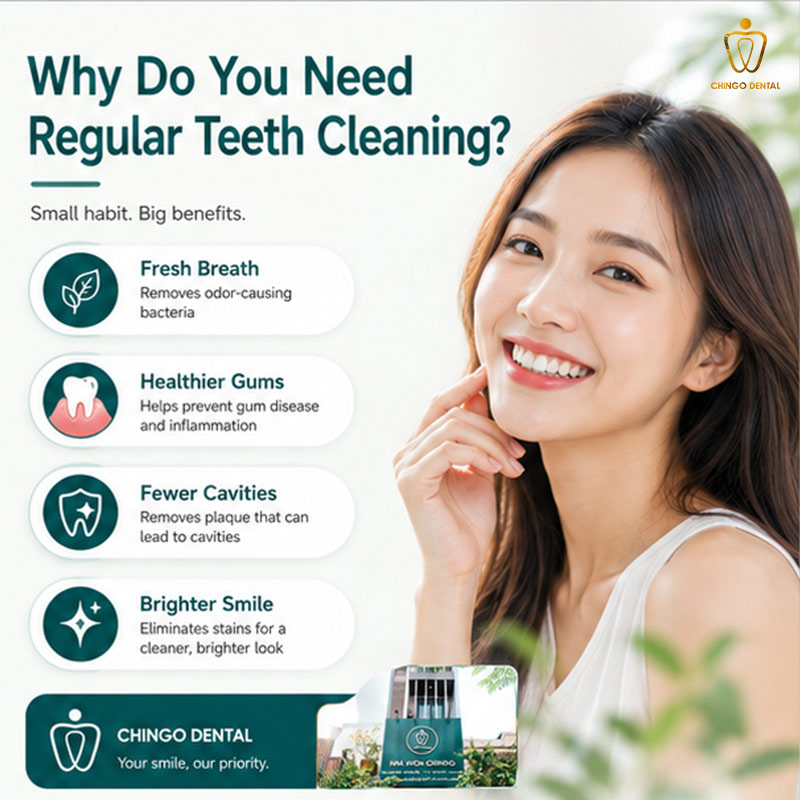
Plaque builds up on your teeth every single day, even if you brush twice and floss regularly. Once plaque hardens into tartar, no amount of brushing will remove it. This is exactly why regular teeth cleaning is not optional for anyone who wants to avoid cavities and gum disease.
Beyond the obvious health reasons, there is also the issue of staining teeth. Coffee, tea, red wine, and tobacco are common culprits that gradually dull your smile. A clean my teeth session is often the fastest, safest way to reverse minor discoloration without resorting to aggressive whitening chemicals that can damage enamel.
Interdental cleaning, or cleaning between your teeth, deserves a special mention here. Most people focus only on the visible surfaces of their teeth and forget the tight spaces in between, where food particles and bacteria love to hide. A professional cleaning addresses these interdental zones directly, something a toothbrush bristle was never designed to do effectively.
One of our long term patients in Da Nang, a teacher who drinks coffee every morning, told us she noticed her teeth looking noticeably brighter just two days after her first visit. Cases like hers are common, and they illustrate why teeth cleaning is about more than just hygiene. It is also about confidence.
There is also a quieter benefit that often gets overlooked. Gum tissue that is constantly irritated by tartar buildup tends to recede over time, which eventually exposes the tooth root and increases sensitivity to hot and cold. Regular teeth cleaning slows this process considerably, protecting not just the appearance of your smile but the long term stability of your teeth themselves. Dentists sometimes describe this as preventive dentistry, and it remains one of the most cost effective investments anyone can make in their own health.
Signs you need a dental cleaning or check up
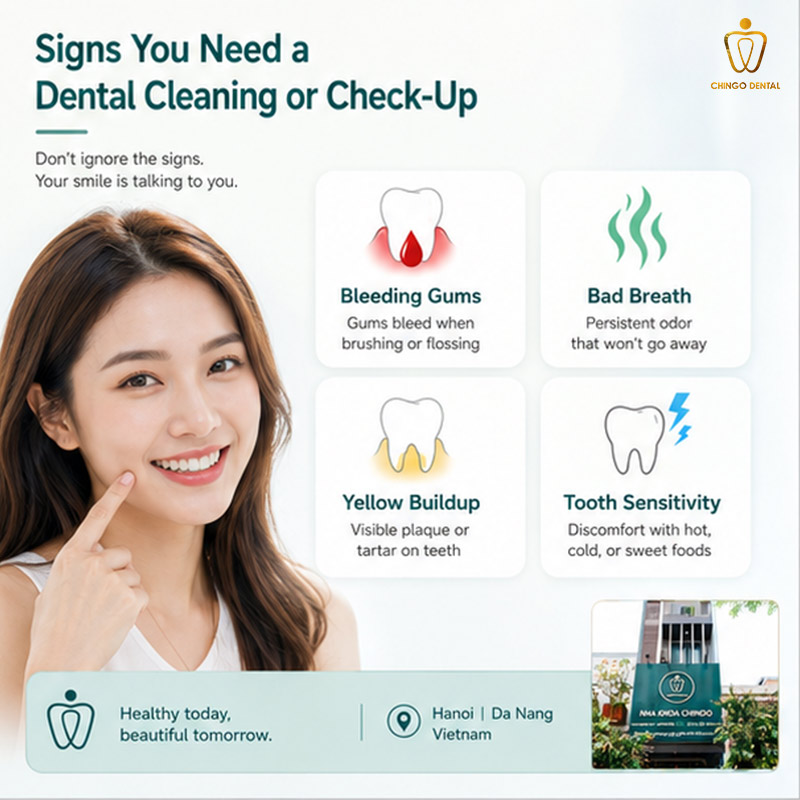
How do you know it is time to book an appointment? A few warning signs are easy to spot if you pay attention. Persistent bad breath that does not improve after brushing is often the first clue. Bleeding gums when you floss, visible yellow or brown buildup near the gum line, and a rough feeling on the back of your lower front teeth are all signals that tartar removal is overdue.
A teeth check up every six months catches these problems early, before they progress into something more serious like gum disease or tooth decay. Waiting too long between visits is the single biggest mistake we see among expats who have been living in Vietnam without a regular dentist. Once tartar accumulates for a year or more, the cleaning process naturally takes longer and may feel more intense.
It is worth mentioning that some patients delay their teeth check up simply because they assume nothing is wrong if there is no pain. Unfortunately, gum disease in its early stages rarely causes noticeable discomfort, which is exactly why it goes unnoticed for so long. By the time pain appears, the underlying damage is often more advanced than patients expect, and treatment becomes more involved than a routine cleaning would have been.
What types of dental cleaning procedures are available?
Not every dental cleaning is the same, and understanding your options helps you choose the right treatment for your specific needs.
Standard scaling and polishing
This is the most common procedure and the one most people picture when they think of teeth cleaning. A dentist uses a scaler, sometimes called a dental scale tool, to gently remove tartar from the surface of each tooth. The process of scale of teeth is followed by polishing, which smooths the enamel and helps prevent new plaque from sticking as easily. Most patients finish this in well under an hour, with little to no discomfort.
Air flow dental cleaning
Air flow dental cleaning, also known as airflow cleaning teeth, has become increasingly popular among patients who want a gentler alternative to traditional scaling. This method uses a controlled stream of air, water, and fine powder to lift stains and soft plaque from the tooth surface without any scraping at all. It is particularly effective for removing stubborn coffee or tea stains and works beautifully alongside basic cosmetic dentistry goals, since it leaves teeth visibly brighter immediately after treatment.
At Chingo Dental, we have invested in modern air flow equipment precisely because it offers a more comfortable experience for patients who are nervous about the scratching sensation of manual scaling. Many of our patients describe it as feeling closer to a spa treatment than a dental procedure.
Deep cleaning and root planing
For patients with more advanced tartar buildup below the gum line, deep cleaning teeth becomes necessary. This procedure, technically known as root planing of teeth, smooths the root surfaces so gums can reattach properly and heal. It takes longer than standard scaling and sometimes requires local anesthesia, but it is essential for anyone showing early signs of periodontal disease. Skipping this step when it is needed almost always leads to more expensive treatment down the road.
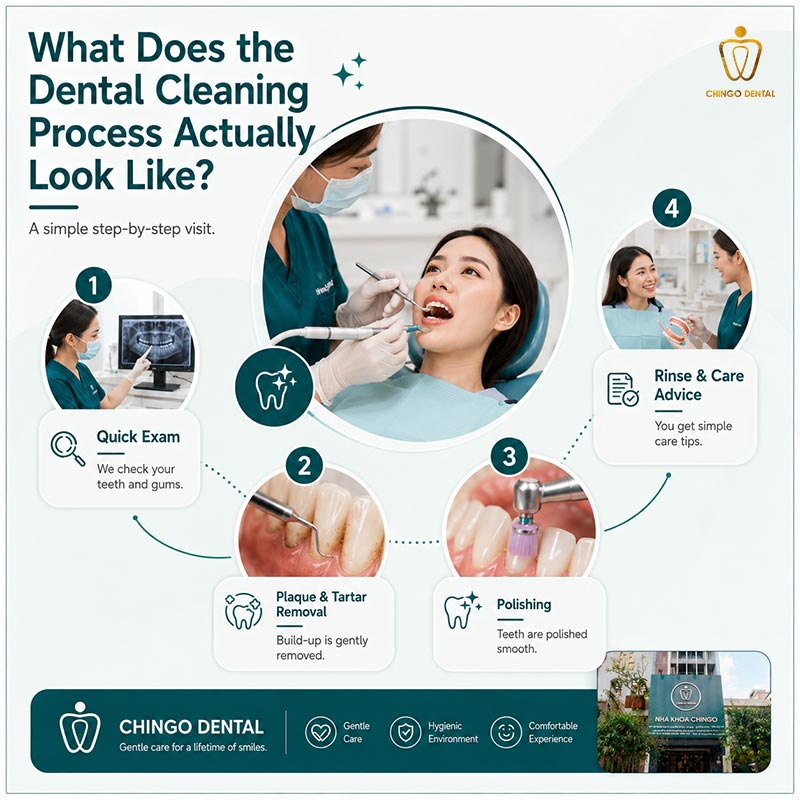
What does the dental cleaning process actually look like?
Walking into an unfamiliar clinic in a foreign country can feel intimidating, so let us break down exactly what happens during a typical visit.
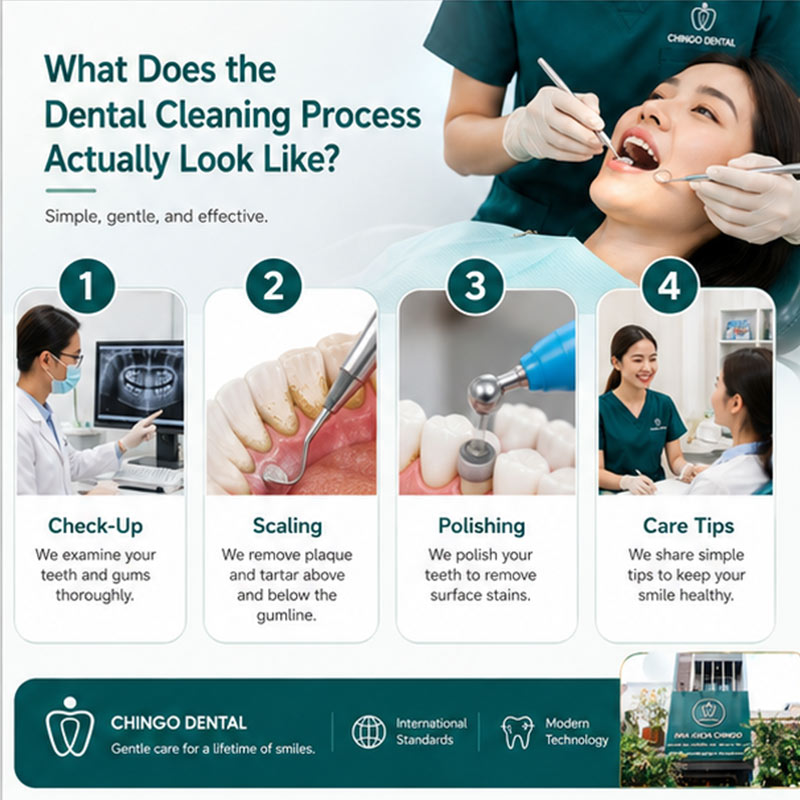
Your appointment begins with a brief examination. The dentist checks your gums, looks for visible cavities, and asks about any sensitivity or pain you have noticed. From there, the team selects the right approach, whether that means standard scaling, airflow cleaning, or a combination of both depending on what your teeth actually need.
Once cleaning is complete, most clinics finish with a polish and a fluoride application to strengthen enamel. The entire process for a routine dental cleaning rarely takes more than forty five minutes, though deeper cases involving root planing of teeth can run longer across two visits.
At Chingo Dental, our team communicates in English throughout the appointment, which has been a relief for many expat patients who previously struggled with language barriers at other clinics. We have found that clear communication before any procedure reduces anxiety significantly, especially for first time visitors who are still learning how dentistry in Vietnam typically operates.
We also encourage patients to ask questions during the appointment rather than waiting until afterward. Dentists at our clinic often pause mid procedure to show patients exactly where tartar was building up, using an intraoral camera so patients can see the same image the dentist sees. This kind of transparency tends to build trust quickly, particularly for patients who have had less reassuring experiences with dental care elsewhere.
How much does dental cleaning cost in Vietnam?
Cost is usually the first question on every expat’s mind, and rightfully so. Vietnam offers some of the most competitive pricing in the region for high quality dental work, which is part of why dental tourism has grown so quickly here in recent years.
The table below outlines typical price ranges you can expect for different types of cleaning at a reputable clinic.
|
Procedure |
Typical Price Range (VND) |
Typical Time Required |
|
Standard scaling and polishing |
300,000 to 600,000 |
30 to 45 minutes |
|
Air flow dental cleaning |
500,000 to 900,000 |
30 to 50 minutes |
|
Deep cleaning with root planing |
1,000,000 to 2,500,000 |
60 to 90 minutes, sometimes over two visits |
These figures are general guidelines and the exact price always depends on the severity of tartar buildup and the specific clinic you choose. Compared to cleaning costs in the United States, Europe, or Australia, patients in Vietnam typically pay a fraction of the price for comparable quality, which explains why so many travelers schedule a cleaning while visiting.
It is worth noting that the cheapest option on paper is not always the best value once you factor in equipment quality and sterilization standards. A clinic charging slightly more for air flow dental cleaning but using properly maintained, regularly serviced machines will almost always deliver a better and safer experience than a clinic cutting corners to offer rock bottom prices. When comparing quotes, ask directly about sterilization practices and how often equipment is replaced.
Where can you find reliable teeth cleaning near you?
Searching for dental cleaning near me only gets you halfway there. Location matters, but so does the quality of equipment, sterilization standards, and whether the staff can communicate clearly with you in English.
Teeth cleaning in Hanoi
If you are based in the capital, dentistry in Hanoi has expanded significantly over the past decade, with clinics now offering everything from basic scaling to advanced cosmetic dentistry. Anyone searching for teeth cleaning Hanoi will quickly notice the range of quality varies a great deal from one clinic to the next, which makes reputation and transparent pricing especially important. Chingo Dental’s Hanoi location serves a steady stream of expat residents, diplomats, and long term travelers who want consistency from one visit to the next rather than switching clinics every time they need a cleaning.
Teeth cleaning in Da Nang
Coastal living in Da Nang has attracted a growing international community, and dentistry in Da Nang has kept pace with that demand. Searches for teeth cleaning Da Nang have risen noticeably over the past few years as more retirees and remote workers settle along the coast. Our Da Nang clinic offers the same air flow dental cleaning technology and sterilization protocols as our Hanoi branch, so patients moving between the two cities never have to compromise on care quality.
What about teeth cleaning in Ho Chi Minh City?
We get this question often, since teeth cleaning Ho Chi Minh City is one of the most searched terms among expats living in the south, and we understand why patients there are also curious about teeth cleaning Ho Chi Minh options before deciding whether to travel. At the moment, Chingo Dental operates exclusively in Hanoi and Da Nang. If you are based in Ho Chi Minh City but plan to travel north, many of our patients simply schedule their cleaning around a work trip or weekend visit, which works out surprisingly well given how central both of our clinics are located.
How often should you get a dental cleaning?
Most dentists, including our team at Chingo Dental, recommend a professional cleaning every six months for the average adult. However, this is a general guideline rather than a fixed rule. Patients who smoke, drink coffee daily, or have a history of gum disease often benefit from visiting every three to four months instead.
Children and teenagers usually follow the same six month rhythm, though parents should pair these visits with a broader check up that monitors how permanent teeth are developing. If you already wear braces or aligners, your orthodontist may recommend slightly more frequent cleanings since brackets and wires tend to trap extra plaque.
What should you expect after a teeth cleaning?
It is completely normal to notice mild sensitivity to hot or cold food for a day or two after a deep cleaning. This usually fades on its own and rarely requires any medication beyond an over the counter pain reliever if needed at all.
Many patients ask whether teeth cleaning can fix staining teeth permanently. The honest answer is that results vary depending on the cause of discoloration. Surface stains from coffee or tobacco respond very well to cleaning, often disappearing entirely. Deeper, internal staining caused by certain medications or aging may require additional cosmetic dentistry options such as whitening or veneers to achieve the brightness patients are hoping for.
Why choose Chingo Dental for your dental cleaning?
Choosing a dental clinic abroad is rarely just about price. Patients want to know their dentist is properly trained, the equipment is modern, and the clinic follows strict sterilization protocols that match international standards.
Every dentist on our team has years of clinical experience, and several have trained or worked alongside international dental organizations before joining Chingo Dental. We sterilize every instrument using autoclave equipment between patients, and our air flow dental cleaning machines are replaced and serviced on a strict schedule rather than left to wear down over years of use.
Feedback from our patients consistently mentions two things: the comfort of the airflow cleaning teeth method compared to traditional scaling, and the clarity of explanations our dentists provide in English before any treatment begins. One recent patient, an Australian teacher based in Da Nang, mentioned that her cleaning appointment was the first time a dentist had actually shown her where tartar was forming and explained why, rather than simply performing the procedure in silence.
If you have been searching for teeth cleaning near me without finding a clinic you trust, we would encourage you to book a consultation with us before committing to anything further. Seeing the clinic, meeting the dentist, and asking questions in person makes a real difference when you are choosing dental care in a new country.
What should you look for when choosing a dental clinic abroad?
Beyond price and location, a few practical details can save you from a disappointing experience. Check whether the clinic publishes its dentists’ credentials and years of experience rather than keeping that information vague. Ask whether instruments are sterilized in an autoclave between every single patient, since this is the international standard and any clinic should be able to answer immediately without hesitation.
It also helps to read recent patient reviews rather than relying only on a clinic’s own marketing claims. Expats living in Hanoi or Da Nang often share recommendations within local community groups, and these firsthand accounts tend to be more reliable than generic star ratings. Finally, consider whether the clinic offers English speaking staff, since miscommunication about treatment options is one of the most common sources of frustration for foreign patients seeking dental cleaning abroad.
Frequently asked questions (FQA)
Question 1. Is dental cleaning painful?
Standard scaling and air flow dental cleaning are generally painless for most patients. Some mild sensitivity can occur, especially around inflamed gums, but it typically fades within a day.
Question 2. How long does a dental cleaning appointment take?
A routine cleaning usually takes between thirty and fifty minutes. Deep cleaning involving root planing of teeth can take longer and sometimes spans two separate visits.
Question 3. Can dental cleaning remove yellow stains or discoloration?
Surface staining teeth caused by coffee, tea, or tobacco often responds very well to cleaning, particularly with the air flow method. Deeper internal discoloration may require additional cosmetic dentistry treatments.
Question 4. Do I need anesthesia for deep cleaning or root planing of teeth?
Local anesthesia is sometimes used for deep cleaning to keep patients comfortable, especially when gums are inflamed or sensitive. Your dentist will discuss this with you before the procedure starts.
Question 5. Is dental cleaning covered by insurance in Vietnam?
Coverage varies widely depending on your insurance provider and whether you hold an international policy. We recommend checking directly with your insurer, and our front desk team at Chingo Dental can help provide documentation for reimbursement claims.
Taking care of your smile starts with one appointment
Dental cleaning is one of the simplest habits you can build into your routine, yet it protects against some of the most common and most preventable dental problems. Whether you need a standard scaling, want to try air flow dental cleaning for a brighter smile, or suspect you might need a deeper treatment like root planing of teeth, getting professional advice early always saves you time, money, and discomfort later.
If you are based in Hanoi or Da Nang, or simply passing through Vietnam, Chingo Dental is ready to help you keep your smile healthy. Book your dental cleaning appointment with us today and experience the difference that clear communication, modern equipment, and genuine care can make.
Contact Information – Chingo Dental International Cosmetic Dentistry
Chingo Hanoi Branch:
- Address: No. 1, Lane 558 Nguyen Van Cu Street, Bo De Ward, Hanoi City
- Hotline: 0915.217.855 – 0912.391.909 – 0978.090.780
Chingo Da Nang Branch:
- Address: No. 22 Le Hong Phong Street, Hai Chau Ward, Da Nang City Da Nang
- Hotline: 0916.019.696 – 0919.590.326 – 0916.102.552
Opening hours: 8:00 AM – 8:00 PM, all days of the week
Email: info@chingodental.vn
Website: https://chingodental.vn
The content of this article is for informational purposes only, regarding. It does not replace a doctor’s diagnosis and treatment. For any questions about oral health, please contact Chingo Dental for direct consultation.